Adult Learning Strategy Planner
Select Your Challenges
Check the factors that make learning difficult for you right now.
Select your challenges above to generate a personalized learning plan.
Recommended Techniques
Spaced Repetition
Review material at increasing intervals to exploit the forgetting curve. Use apps like Anki.
Interleaving
Mix different topics or skills in one session rather than blocking. Forces active retrieval.
The Feynman Technique
Teach what you learn to someone else (or pretend to). Identifies gaps in understanding.
Aerobic Exercise
Boosts BDNF production. 30 mins of walking daily significantly improves cognitive performance.
Sleep Hygiene
Prioritize 7-9 hours. Deep sleep moves info from short-term to long-term storage.
Analogical Reasoning
Anchor new info to existing knowledge (Crystallized Intelligence). Find connections.
Have you ever tried to pick up a new skill in your thirties or forties and felt like your brain was hitting a brick wall? Maybe it’s learning a new language, mastering a coding framework, or even just remembering where you put your keys. It feels different than when you were twenty. Back then, information seemed to stick like glue. Now, it slips through your fingers like sand.
This isn’t just in your head, nor is it a sign that you’re losing your edge. It is a biological reality, but it is also a manageable one. The question isn’t whether you can still learn-you absolutely can-but why the process has changed gears. Understanding the mechanics of an aging brain allows you to stop fighting against your biology and start working with it.
The Myth of the "Fixed" Adult Brain
For decades, the prevailing scientific belief was that the human brain stopped developing after childhood. Scientists thought that once you reached adulthood, your neural pathways were set in stone, like concrete pouring into a mold. If this were true, adult education would be nearly impossible. But we know that’s not the case. People learn new jobs, master instruments, and navigate complex social changes well into their eighties.
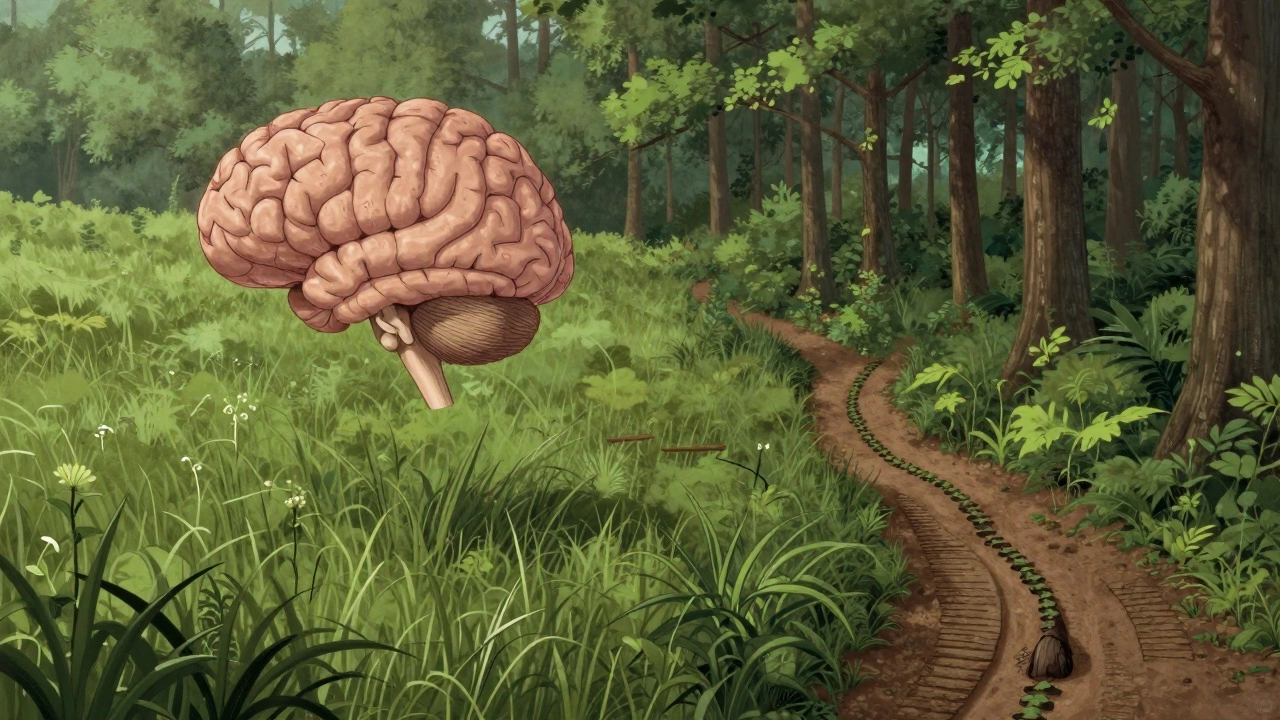
The key concept here is neuroplasticity, which is the brain's ability to reorganize itself by forming new neural connections throughout life. While plasticity doesn't disappear as you age, it does change its nature. In children, the brain is like a wide-open field; anything can grow anywhere. In adults, the brain is more like a dense forest with established trails. New paths can certainly be carved, but they require more deliberate effort to clear away the underbrush of old habits and existing knowledge.
This shift means that adult learning is less about raw absorption and more about strategic integration. You aren't starting from zero; you are building on a massive library of existing data. This is both a burden and a superpower, depending on how you handle it.
The Efficiency Trap: Why Familiarity Hinders Novelty
One of the biggest hurdles for older learners is something called "cognitive efficiency." As you age, your brain becomes incredibly good at automating tasks. Driving to work, typing on a keyboard, or managing a budget-these become automatic processes handled by the basal ganglia, a part of the brain responsible for habit formation. This frees up your prefrontal cortex, the area responsible for higher-order thinking, to focus on other things.
However, this efficiency creates a trap when you try to learn something completely new. Your brain expects patterns. When you encounter novel information that doesn't fit into your existing schemas (mental frameworks), your brain resists. It views the new information as noise rather than signal. This is often described as "interference."
- Proactive Interference: Old memories make it hard to form new ones. For example, trying to learn Spanish when you already speak French might cause you to mix up vocabulary because your brain keeps pulling up the familiar French words.
- Retroactive Interference: New learning makes it harder to recall old information. This is less common in skill acquisition but happens in areas like technology, where new interfaces overwrite muscle memory for old ones.
To overcome this, you have to consciously disrupt your automaticity. You cannot rely on intuition alone. You must engage in active, focused attention, which is metabolically expensive for the brain. That’s why learning feels "harder"-it literally requires more energy expenditure than it did when your brain was still in its high-plasticity, low-efficiency phase.
Changes in Working Memory and Processing Speed
If neuroplasticity is the hardware upgrade, working memory is the RAM. Working memory is a cognitive system with limited capacity that is responsible for temporarily holding information available for processing. Research consistently shows that fluid intelligence-the ability to solve novel problems, identify patterns, and reason quickly-peaks in early adulthood and gradually declines.
This doesn’t mean you’re getting "dumber." It means your processing speed slows down slightly. Think of it like a computer processor. A younger brain might have a faster clock speed, allowing it to juggle multiple variables simultaneously without breaking a sweat. An older brain might have a slower clock speed but significantly better storage and indexing systems (crystallized intelligence).
When you try to learn a complex new skill, such as playing chess or understanding macroeconomics, you need to hold several pieces of information in your head at once. If your working memory capacity shrinks, you drop balls. This leads to frustration. The solution isn’t to force yourself to think faster; it’s to offload the cognitive load. Use notes, diagrams, and spaced repetition tools to externalize the information so your working memory isn’t overwhelmed.
| Attribute | Young Learner (Under 25) | Adult Learner (40+) |
|---|---|---|
| Neuroplasticity | High; rapid formation of new connections | Moderate; requires focused intent and repetition |
| Processing Speed | Fast; quick reflexes and pattern recognition | Slower; benefits from preparation and pacing |
| Contextual Understanding | Low; lacks real-world reference points | High; rich database of experiences to anchor new info |
| Distraction Tolerance | Variable; often easily distracted by novelty | Higher goal-orientation; better at filtering irrelevant noise |
The Role of Sleep and Biological Maintenance
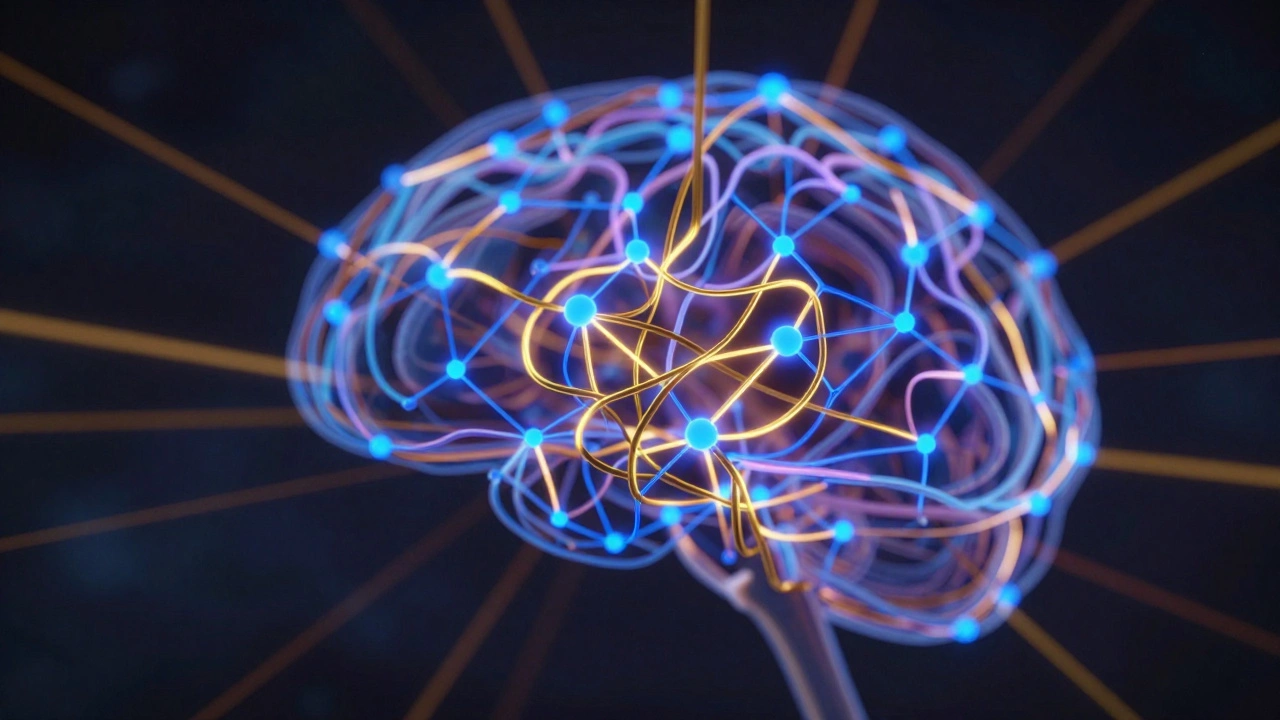
You cannot separate learning from biology. One of the most significant reasons learning feels harder as you age is that sleep architecture changes. During deep sleep, specifically slow-wave sleep, the brain consolidates memories. It moves information from short-term storage in the hippocampus to long-term storage in the neocortex.
As we age, we spend less time in deep sleep stages. We wake up more frequently. This fragmentation means that the "save button" for your daily learning isn’t being pressed as firmly. If you study for two hours but only get four hours of fragmented sleep, you’ve wasted half your effort. A twenty-year-old might pull an all-nighter and still retain the material due to robust recovery mechanisms. An older adult will likely experience significant cognitive fog and poor retention.
Prioritizing sleep hygiene isn’t just wellness advice; it’s a learning strategy. Ensure you are getting seven to nine hours of quality sleep. Avoid screens before bed, keep your room cool, and maintain a consistent schedule. Without proper consolidation, no amount of studying will help you retain new skills.
Leveraging Crystallized Intelligence
While fluid intelligence may dip, crystallized intelligence rises. Crystallized intelligence refers to accumulated knowledge, facts, and skills that are acquired over a lifetime. This is your greatest asset. When you learn something new, don’t try to memorize it in isolation. Anchor it to what you already know.
If you are learning Python programming and you understand logic from mathematics, map the concepts. If you are learning a new language and you speak another Romance language, look for cognates. Adults learn best through analogical reasoning. Your brain is a web of associations. The more connections you can make between the new node and existing nodes, the stronger the memory trace will be.
This is why adult education often emphasizes case studies and practical application over rote memorization. You need context. Abstract facts are hard to hold onto. Concrete examples that resonate with your life experience are sticky. Ask yourself: "How does this relate to my job? My hobbies? My past mistakes?" Creating these personal hooks makes the information retrievable later.
Strategies for Effective Adult Learning
Knowing the challenges is half the battle. The other half is adopting strategies that align with your current cognitive profile. Here are actionable steps to make learning easier and more effective as you age.
- Embrace Spaced Repetition: Cramming works for exams, but it fails for long-term retention. Use apps like Anki or physical flashcards to review material at increasing intervals. This exploits the "forgetting curve" identified by Hermann Ebbinghaus, reinforcing memories just as they are about to fade.
- Interleave Topics: Instead of blocking your study time (e.g., six hours of guitar practice), interleave different skills or topics. Practice chords, then scales, then songs. This forces your brain to constantly retrieve information, strengthening neural pathways more effectively than repetitive drilling.
- Teach What You Learn: The Feynman Technique suggests that if you can’t explain a concept simply, you don’t understand it. Teaching someone else-or even pretending to teach them-forces you to organize your thoughts and identify gaps in your knowledge.
- Physical Exercise: Aerobic exercise increases blood flow to the brain and stimulates the production of BDNF (Brain-Derived Neurotrophic Factor), a protein that supports the survival of existing neurons and encourages the growth of new synapses. Thirty minutes of walking a day can significantly boost cognitive performance.
- Manage Stress: Chronic stress releases cortisol, which is toxic to the hippocampus, the brain’s memory center. High anxiety blocks learning. Incorporate mindfulness or meditation practices to lower baseline stress levels before engaging in difficult learning tasks.
Conclusion: Reframing the Challenge
It gets harder to learn as you get older because the brain prioritizes efficiency and stability over raw adaptability. This is a feature, not a bug. It allows you to function competently in a complex world without having to relearn everything every day. However, this same mechanism can feel like resistance when you push for novelty.
The good news is that the barrier is not insurmountable. By acknowledging the shift in neuroplasticity, respecting the limits of working memory, prioritizing sleep, and leveraging your vast reservoir of crystallized intelligence, you can hack the system. You may not learn as fast as you did at eighteen, but you can learn deeper, more meaningfully, and with greater retention. The goal isn’t to be a sponge again; it’s to be a skilled architect, building upon the foundation you’ve spent a lifetime constructing.
Is it true that adults lose the ability to learn new skills?
No, it is not true. Adults retain neuroplasticity throughout their lives. While the rate of forming new neural connections may slow compared to childhood, the brain remains capable of significant reorganization and learning. The challenge lies in overcoming established habits and managing cognitive load, not in a loss of capability.
How does sleep affect learning in older adults?
Sleep is critical for memory consolidation. As people age, they often experience less deep sleep, which is the stage where short-term memories are transferred to long-term storage. Fragmented sleep can lead to poor retention of newly learned material. Prioritizing 7-9 hours of quality sleep is essential for effective adult learning.
What is the difference between fluid and crystallized intelligence?
Fluid intelligence refers to the ability to solve novel problems and recognize patterns, which tends to peak in early adulthood and decline with age. Crystallized intelligence involves accumulated knowledge and experience, which typically increases or remains stable throughout life. Adult learners should leverage their crystallized intelligence to anchor new information.
Can exercise improve cognitive function for learning?
Yes. Regular aerobic exercise boosts the production of BDNF (Brain-Derived Neurotrophic Factor), a protein that supports neuron health and synaptic growth. Studies show that physical activity can enhance memory, attention, and processing speed, making it easier to acquire new skills.
Why does interference happen when learning new languages or skills?
Interference occurs when existing knowledge conflicts with new information. Proactive interference happens when old memories hinder the formation of new ones (e.g., mixing up similar languages). Retroactive interference happens when new learning disrupts recall of old information. This is common in adults due to their extensive existing knowledge base.