Online Learning Suitability Calculator
Your Result
You’ve probably heard the arguments. One side says online learning is the future, offering freedom and flexibility that traditional schools can’t match. The other side claims it’s a lonely, ineffective distraction that leaves students behind. So, which one is right? Is online learning actually good for you, or is it just a convenient excuse for poor engagement?
The truth isn’t black and white. It depends entirely on who you are, what you’re studying, and how you handle your time. For some people, sitting in a lecture hall feels like torture, while staring at a screen feels like liberation. For others, the lack of structure leads to procrastination and burnout. Let’s break down the reality of distance education without the hype.
The Case for Flexibility: Why Some Thrive
The biggest selling point of online education is control. You aren’t tied to a rigid schedule. If you work full-time, have kids, or simply function better at night, this model adapts to you. In 2026, platforms are more sophisticated than ever. Tools like asynchronous video lectures allow you to pause, rewind, and review complex topics at your own pace. This is a massive advantage for visual learners or those who need extra time to process information.
Consider Sarah, a nurse working night shifts. In a traditional setting, she’d have to quit her job or drop out of school. With online courses, she studies during her days off. She retains her income and gains new skills simultaneously. This accessibility breaks down barriers for non-traditional students, parents, and career changers. It democratizes education by removing geographical constraints. You can take a course from a university in London while living in Vermont, paying local tuition rates or accessing free resources globally.
Furthermore, the digital nature of these programs builds specific tech skills. Navigating learning management systems (LMS), collaborating via Slack or Microsoft Teams, and managing digital files are now standard workplace requirements. By studying online, you’re inadvertently training for the modern remote-work economy. You learn self-discipline, digital communication, and time management-soft skills that employers value highly.
The Hidden Costs: Isolation and Distraction
However, let’s talk about the downsides. The most common complaint isn’t the quality of the material; it’s the isolation. Humans are social creatures. We learn through interaction, debate, and shared experiences. When you remove the physical classroom, you lose the spontaneous conversations after class, the study groups formed over coffee, and the sense of community.
This isolation can lead to mental health struggles. Without peers to check in with, it’s easy to feel disconnected and unmotivated. Procrastination becomes a real enemy. When no one is watching, it’s tempting to skip a module or delay an assignment until the last minute. This ‘time poverty’ paradox means that while you save time on commuting, you often spend more hours trying to stay organized and focused amidst household distractions.
Then there’s the issue of attention spans. In a physical classroom, the teacher can read the room. They see confused faces and adjust their teaching style. Online, you’re often alone with a pre-recorded video. If you get bored, you might click away to social media. Studies suggest that deep focus is harder to maintain in home environments where TVs, phones, and chores compete for your attention. For students who struggle with executive function disorders like ADHD, the lack of external structure can be debilitating.

Quality Variance: Not All Courses Are Created Equal
Another critical factor is the quality of instruction. Just because a course is online doesn’t mean it’s well-designed. Many institutions rushed to digitize their curricula during the pandemic, resulting in poorly structured content. A bad online course looks like a PDF textbook uploaded to a website with a multiple-choice quiz at the end. That’s not learning; that’s compliance checking.
Good online learning requires intentional design. It should include interactive elements, peer discussions, and regular feedback loops. Look for courses that offer live sessions or discussion forums moderated by instructors. These features mimic the social aspect of traditional learning and keep you accountable. If a program lacks human interaction, ask yourself if you’re really getting an education or just consuming content.
Also, consider the accreditation. In the world of higher education, not all online degrees carry equal weight. Ensure the institution is regionally accredited. Employers care about credentials. A degree from a reputable university delivered online holds the same value as one earned on campus. But beware of diploma mills that prey on desperate learners with promises of quick, easy certifications.
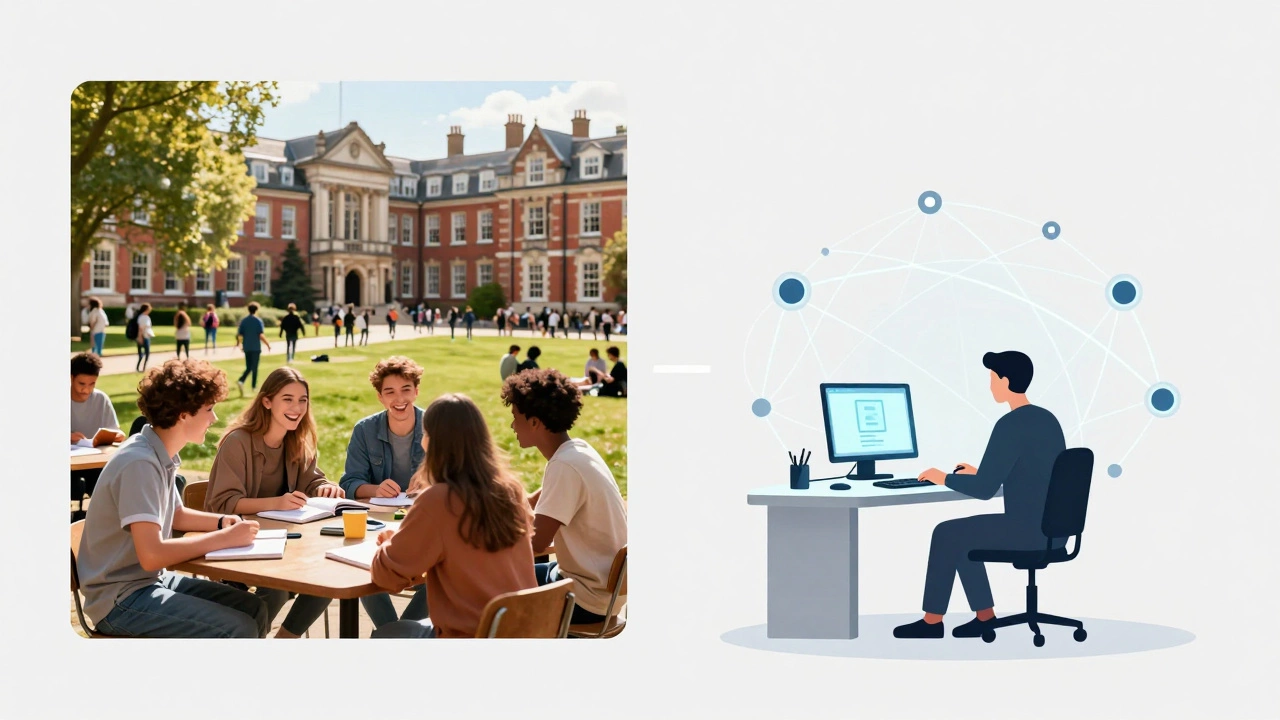
| Feature | Traditional Classroom | Online Learning |
|---|---|---|
| Schedule | Fixed times, rigid | Flexible, self-paced |
| Interaction | Face-to-face, immediate | Digital, often delayed |
| Cost | Higher (commuting, housing) | Lower (no commute, materials digital) |
| Discipline Required | External (teacher presence) | Internal (self-motivation) |
| Networking | Organic, strong bonds | Intentional, weaker ties |
Who Should Choose Online Learning?
So, is it good or bad? It’s neither. It’s a tool. Like any tool, its effectiveness depends on the user. Online learning is ideal for:
- Self-starters: People who can organize their day without supervision.
- Busy professionals: Those balancing work, family, and education.
- Anxious learners: Individuals who feel intimidated by speaking up in large groups.
- Rural residents: Students with limited access to local colleges or specialized courses.
On the flip side, you might want to stick with traditional classes if:
- You need structure: You thrive on routine and external deadlines.
- You learn socially: You benefit from group debates and hands-on labs.
- You struggle with technology: Technical glitches add unnecessary stress to your learning process.
- You crave community: Campus life and networking events are part of why you go to school.
Making It Work: Tips for Success
If you decide to try online learning, don’t just show up. Create a system. Designate a specific workspace that is separate from your relaxation areas. Train your brain to associate that desk with focus. Set a consistent schedule. Even if the course is asynchronous, treat it like a job. Show up at the same time every day.
Engage actively. Don’t just watch videos. Take notes, post in forums, and reach out to instructors when you’re stuck. Build your own community by forming virtual study groups. Use project management tools like Trello or Notion to track assignments. Treat your education as a proactive pursuit, not a passive obligation.
Finally, be honest with yourself. If you find yourself constantly distracted or feeling isolated, it might not be the right fit. There’s no shame in switching back to a hybrid or in-person model. The goal is learning, not suffering through a format that doesn’t work for you.
Is online learning recognized by employers?
Yes, as long as the institution is accredited. Most employers care about the credential and the skills you demonstrate, not how you acquired them. In fact, many view online degrees positively because they signal self-discipline and time-management skills.
Which subjects are best suited for online learning?
Subjects like computer science, business, humanities, and writing excel online. Fields requiring heavy lab work, such as nursing, chemistry, or engineering, often require hybrid models where theoretical parts are online and practical skills are learned in person.
How do I stay motivated without a teacher watching me?
Set micro-goals and reward yourself. Break large projects into small, manageable tasks. Join online study communities to create accountability partners. Remember your 'why'-whether it’s a career change or personal growth-and revisit it when motivation dips.
Are online degrees cheaper than traditional ones?
Often, yes. You save on commuting, housing, and sometimes textbooks. However, tuition fees vary by institution. Always compare the total cost of attendance, including hidden fees for software or platform access.
Can I network effectively in an online environment?
It requires more effort but is possible. Participate actively in discussion boards, attend virtual office hours, and connect with classmates on LinkedIn. Virtual networking allows you to build a global network rather than being limited to your local area.