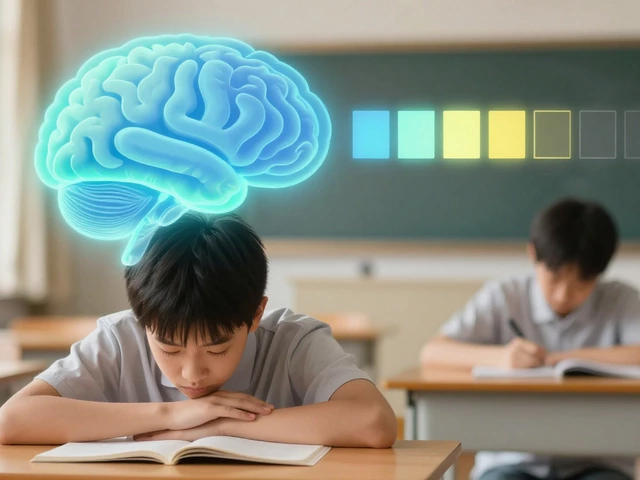
Autism vs. Learning Disability: Root Cause Analyzer
This tool analyzes common behavioral and academic scenarios to help identify whether challenges stem primarily from Autism Spectrum Disorder (ASD) traits or Specific Learning Disabilities (SLD).
Question goes here...
Assessment Complete
Result Title
Description of result.
Recommended Support Strategies:
You’ve probably heard the terms thrown around in the same breath. A teacher mentions a student is on the spectrum, then immediately talks about their reading struggles. It’s easy to assume that Autism Spectrum Disorder (ASD) is just another type of learning disability. But if you’re a parent, educator, or someone navigating this world yourself, you know it’s not quite that simple. The short answer? No, autism is not technically a learning disability. It’s a developmental disability. However, the lines blur constantly in real life because they often show up together.
Getting this distinction right matters. It changes how we support kids, what resources families can access, and how schools build Individualized Education Programs (IEPs). If you treat autism exactly like dyslexia or dyscalculia, you might miss the mark on social communication needs. If you ignore the learning gaps that come with autism, you leave a child behind academically. Let’s untangle this knot so you can advocate better for the people you care about.
The Core Difference: Development vs. Learning
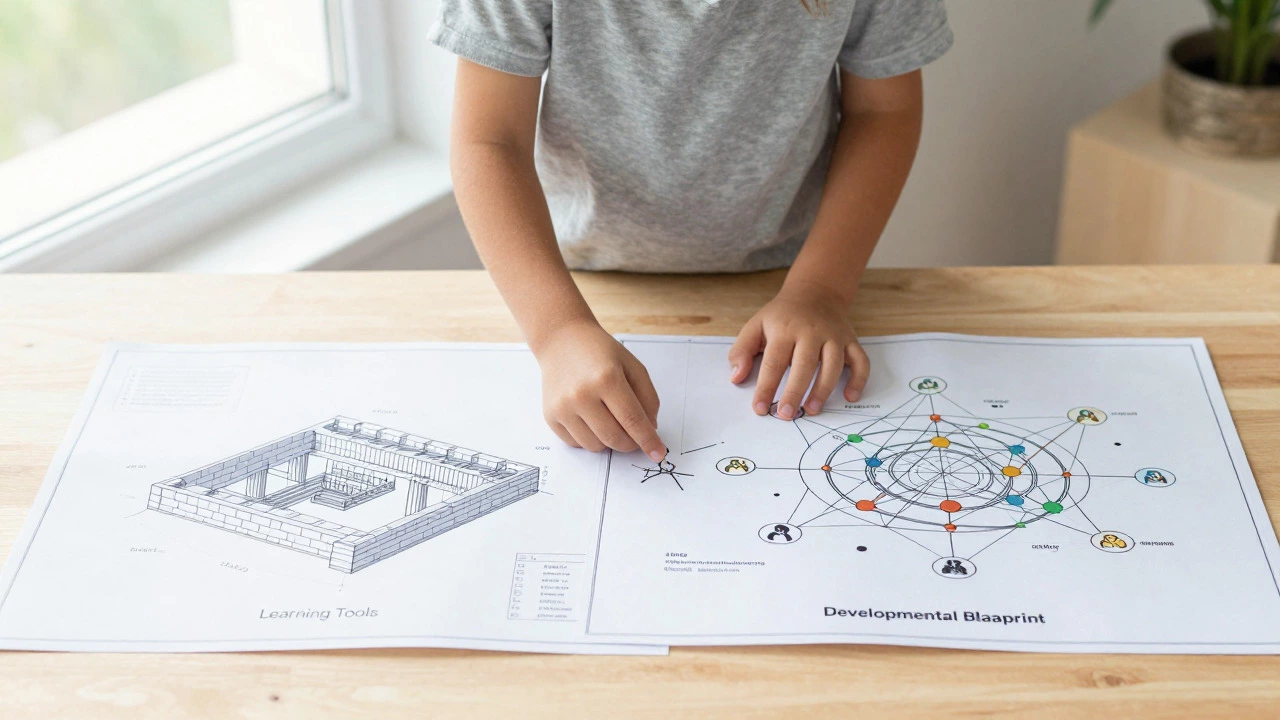
To understand why autism isn’t classified as a learning disability, we have to look at how each condition works under the hood. Think of it like building a house. A learning disability affects specific tools used to construct parts of the house-like math or reading. Autism affects the blueprint itself, influencing how the whole structure connects to its environment.
Learning disabilities are neurodevelopmental disorders that affect the brain's ability to receive, process, store, and respond to information. They are usually specific. A child with dyslexia struggles primarily with decoding text. A child with ADHD might struggle with focus and impulse control, which impacts learning but isn't a deficit in intelligence or processing speed per se. These conditions don’t necessarily change how a person interacts socially or perceives sensory input outside the classroom.
On the other hand, Autism is a complex developmental disorder affecting communication, behavior, and social interaction. It’s pervasive. It touches every part of daily life, from how you interpret a friend’s joke to how loud the cafeteria sounds. The Centers for Disease Control and Prevention (CDC) defines autism by two main criteria: persistent deficits in social communication and restricted, repetitive patterns of behavior. While learning is impacted, it’s not the defining feature.
Why the Confusion Persists
If the definitions are distinct, why do so many people lump them together? There are three main reasons: co-occurrence, overlapping symptoms, and historical labeling.
First, let’s talk numbers. Research consistently shows that a significant portion of autistic individuals also have a diagnosed learning disability. Estimates vary, but studies suggest that between 30% and 50% of children with autism also meet the criteria for a specific learning disability. When half the population has both, it’s natural to conflate the two. You see the reading struggle, you see the autism diagnosis, and your brain links them as one package deal.
Second, some symptoms look identical from the outside. An autistic child might not raise their hand because they don’t understand the social rule of waiting for permission (an autism trait). Another child might not raise their hand because they haven’t processed the question yet due to a language processing disorder (a learning disability). To an observer, the outcome is the same: silence. But the root cause-and therefore the fix-is completely different.
Third, older diagnostic manuals were less precise. Before the DSM-5 consolidated various diagnoses into Autism Spectrum Disorder, there was a category called Asperger’s Syndrome, which was often associated with average or above-average intelligence but significant social challenges. This created a mental model where “smart but quirky” became synonymous with autism, while “struggling in school” was reserved for learning disabilities. That outdated view still lingers in many classrooms today.
How Autism Impacts Learning Differently
Even without a separate learning disability diagnosis, autism creates unique barriers to academic success. These aren’t traditional “learning” deficits; they are executive function and sensory hurdles.
- Sensory Overload: Imagine trying to solve complex algebra equations while a fluorescent light buzzes at a frequency only you can hear, and the tag on your shirt feels like sandpaper. For many autistic students, the classroom environment is physically exhausting. This fatigue drains the cognitive energy needed for learning.
- Literality and Abstract Concepts: Autistic thinkers often excel at concrete details but struggle with abstract metaphors or implied meanings. In literature class, understanding that “it’s raining cats and dogs” means heavy rain, not actual animals falling from the sky, requires a leap in interpretation that can be challenging. This isn’t a reading disability; it’s a difference in linguistic processing.
- Executive Functioning: Planning, organizing, initiating tasks, and managing time are core executive functions. Autism frequently impacts these skills. A student might know the material perfectly but fail the test because they couldn’t organize their notes or manage their time during the exam. This looks like a learning failure, but it’s actually a management failure.

When They Overlap: Co-occurring Conditions
This is where things get tricky for parents and educators. A child can absolutely have both autism and a learning disability. In fact, screening for learning disabilities is a critical part of a comprehensive autism evaluation.
| Feature | Autism Spectrum Disorder | Specific Learning Disability (e.g., Dyslexia) |
|---|---|---|
| Primary Impact Area | Social communication, sensory processing, behavioral flexibility | Specific academic skills (reading, writing, math) |
| Social Interaction | Often impaired; difficulty reading social cues | Typically unaffected; social skills align with age |
| Sensory Issues | Common (hypersensitivity or hyposensitivity) | Not a primary diagnostic criterion |
| Intelligence Range | Wide range (intellectual disability to giftedness) | Usually average to above-average intelligence |
| Diagnostic Basis | Behavioral observations and developmental history | Discrepancy between potential and academic achievement |
If a child has both, their educational plan needs to address both sets of needs. Treating only the autism might leave their dyslexia unaddressed. Treating only the dyslexia might ignore the anxiety caused by sensory overload. This dual-diagnosis scenario requires a highly coordinated approach between special education teachers, speech therapists, and occupational therapists.
Navigating School Systems and Legal Rights
In the United States, the Individuals with Disabilities Education Act (IDEA) governs special education services. Here, the distinction becomes legally significant. IDEA lists “Autism” and “Specific Learning Disability” as separate categories for eligibility.
Does this mean a child must be labeled one or the other? Not necessarily. A child can qualify for services under the “Autism” category even if they have learning gaps, provided those gaps are related to their autism. Conversely, a child with mild autism traits who struggles primarily with math might qualify under “Specific Learning Disability.” The goal isn’t to pick the right label; it’s to ensure the Individualized Education Program (IEP) addresses the child's actual needs.
Parents should push for comprehensive evaluations. Don’t accept a quick referral based on observation alone. Request psychoeducational testing that assesses both cognitive abilities and academic achievement. This data helps determine if the learning struggle is a symptom of autism (like attention issues) or a separate learning disability (like a phonological processing deficit).

Practical Strategies for Support
Whether the barrier is autism, a learning disability, or both, effective support shares common threads. Here’s what works in practice:
- Visual Supports: Both autistic learners and those with learning disabilities benefit from visual schedules, graphic organizers, and written instructions alongside verbal ones. This reduces reliance on auditory processing, which can be a weak point for both groups.
- Multisensory Teaching: Use methods that engage multiple senses. For reading, try Orton-Gillingham approaches that combine sight, sound, and touch. For math, use manipulatives. This reinforces neural pathways regardless of the specific diagnosis.
- Explicit Social Instruction: If social difficulties stem from autism, teach social rules explicitly rather than assuming they will be picked up osmotically. Role-play scenarios. Explain the “why” behind social norms.
- Accommodations, Not Just Modifications: Accommodations change how a student learns (extra time, quiet room). Modifications change what a student learns (reduced workload). Aim for accommodations first to keep standards high, modifying only when necessary.
Advocating for Your Child
Knowledge is power, especially in school meetings. When you understand that autism is a developmental difference that can* include learning challenges, you stop arguing about labels and start focusing on outcomes.
Ask questions like: “Is my child’s difficulty with writing due to fine motor coordination (common in autism), dysgraphia (a learning disability), or both?” This forces the team to look deeper. Demand data-driven decisions. If a strategy isn’t working after a reasonable trial period, pivot. Flexibility is key.
Remember, the goal isn’t to “fix” the autism or erase the learning disability. It’s to remove the barriers so the individual can thrive. By recognizing the distinct nature of autism while acknowledging its frequent overlap with learning disabilities, you create a more accurate, compassionate, and effective path forward.
Can autism be considered a learning disability under IDEA?
Technically, no. Under the Individuals with Disabilities Education Act (IDEA), "Autism" and "Specific Learning Disability" are two separate eligibility categories. However, a child diagnosed with autism may still receive special education services for learning-related needs if those needs are determined to be a direct result of their autism. Schools evaluate the impact on educational performance, not just the medical diagnosis.
What percentage of autistic people also have a learning disability?
Research estimates vary, but studies generally indicate that between 30% and 50% of individuals with Autism Spectrum Disorder also have a co-occurring specific learning disability such as dyslexia, dyscalculia, or dysgraphia. This high rate of co-occurrence is why comprehensive assessments are crucial.
How do you tell if a child's school struggles are due to autism or a learning disability?
It requires a detailed psychoeducational evaluation. If the struggles are isolated to specific academic areas like decoding text or calculating math facts despite normal instruction, it points toward a learning disability. If the struggles involve broader issues like attention regulation, sensory distraction, understanding multi-step directions, or social context in group work, it likely stems from autism. Often, a combination of both is present.
Does having autism mean a child has intellectual disabilities?
No. Autism exists on a spectrum that includes a wide range of intellectual abilities. Approximately 30% of autistic individuals have an intellectual disability (IQ below 70), while the majority have average or above-average intelligence. Many autistic adults are highly successful in fields requiring intense focus and pattern recognition, such as engineering, coding, and science.
What is the best way to support an autistic student with learning differences?
The most effective approach is individualized and multisensory. Use visual aids, provide clear and literal instructions, allow for sensory breaks, and offer extra time for processing. Collaborate closely with occupational therapists and speech-language pathologists to address underlying executive function and communication challenges that hinder academic performance.