
Interactive 3-2-1 Study Reflection Tool
Your Session Input
Step-by-StepLive Preview
Start typing above to see your reflection take shape.
You just finished reading a dense chapter on cognitive psychology. You highlighted three paragraphs. You nodded along as if you understood it all. Then, you close the book and try to explain the main concept to yourself. Nothing comes out. Your mind is blank. This is the illusion of competence, and it is the number one reason students fail exams despite studying for hours.
The problem isn’t your intelligence. It’s your method. Passive reading creates weak neural pathways that vanish under pressure. To fix this, you need a system that forces your brain to work. Enter the 3-2-1 Memory Technique. It is not a magic spell, but a structured framework for active recall and information synthesis. By breaking down complex material into manageable chunks, you transform passive consumption into active creation. This guide will show you exactly how to use this technique to lock in knowledge for good.
Why Traditional Studying Fails (And What Works Instead)
Most students rely on re-reading notes or highlighting text. Research from Harvard psychologist Daniel Willingham shows that these methods are among the least effective ways to learn. They create familiarity, not mastery. You recognize the words, but you cannot retrieve the meaning without looking at the page.
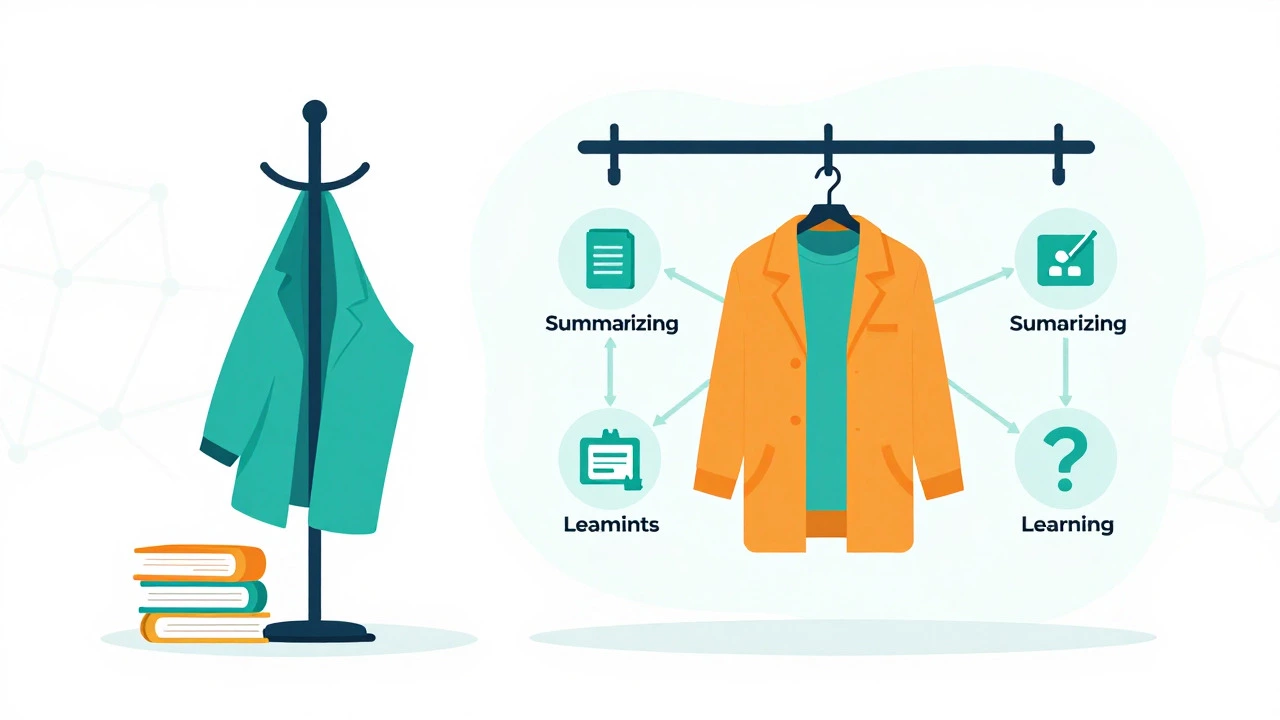
The 3-2-1 Method flips this script. It is based on the principle of elaborative encoding. When you summarize, connect, and question information, you build multiple hooks in your memory. Think of it like hanging a coat. If you only have one hook (passive reading), the coat falls off easily. If you have three hooks (summary, connections, questions), the coat stays put even when the room shakes during an exam.
- Passive Learning: Reading, listening, highlighting. Low effort, low retention.
- Active Learning: Summarizing, teaching, testing. High effort, high retention.
The 3-2-1 technique forces you into the active category. It requires you to process information deeply rather than skimming the surface. This depth is what separates those who memorize facts from those who understand concepts.
Breaking Down the 3-2-1 Framework
The beauty of this technique lies in its simplicity. After every study session, chapter, or lecture, you stop and complete three specific tasks. These tasks correspond to the numbers 3, 2, and 1. Let’s look at each component in detail.
The "3": Three Things You Learned
This step focuses on information extraction and summarization. You must identify three distinct pieces of new information. These should be facts, concepts, or procedures that were previously unknown or unclear to you.
Do not write vague statements like "I learned about history." Be specific. For example:
- The Treaty of Versailles imposed reparations of 132 billion gold marks on Germany.
- Photosynthesis occurs in the chloroplasts, specifically using sunlight to convert carbon dioxide and water into glucose.
- Python uses indentation to define code blocks, unlike languages that use curly braces.
By forcing yourself to list three items, you ensure you didn’t just zone out. You had to scan the material, filter out noise, and select the most important signals. This act of selection strengthens memory traces.
The "2": Two Things That Interested You
This step engages emotional and personal connection. Information sticks better when it resonates with your interests or surprises you. Identify two aspects of the material that sparked curiosity, confusion, or excitement.
Why does interest matter? The amygdala, the part of the brain responsible for emotion, interacts closely with the hippocampus, which handles memory formation. When something interests you, your brain tags it as "important."
- Example: "I was fascinated by how octopuses can change color instantly because of specialized cells called chromatophores."
- Example: "It surprised me that the Great Wall of China is not visible from space with the naked eye, debunking a common myth."
If nothing interested you, ask why. Was the material too dry? Did you miss the context? Finding interest turns a chore into an exploration. Even finding something confusing is valuable-it highlights gaps in your understanding that need addressing.
The "1": One Question You Still Have
This step drives critical thinking and future inquiry. No study session is perfect. There will always be something left unanswered. Write down one question that remains after your review.
This question serves two purposes. First, it prevents the illusion of competence. If you can’t answer it, you know you don’t fully understand. Second, it gives you a clear starting point for your next study session. Instead of staring at a textbook wondering where to begin, you have a targeted goal.
- Example: "How does inflation affect purchasing power differently in rural versus urban areas?"
- Example: "Why do some programming languages prefer static typing over dynamic typing?"
Leaving a question unresolved creates a psychological tension known as the Zeigarnik effect. Your brain wants closure. This tension keeps the topic alive in your subconscious, making you more receptive to the answer when you encounter it later.
How to Implement the 3-2-1 Technique in Your Study Routine
Knowing the theory is one thing; applying it consistently is another. Here is a practical workflow to integrate this method into your daily routine.
- Set a Timer: Study for a focused block of time, such as 25 minutes (using the Pomodoro Technique). Avoid distractions.
- Pause and Reflect: When the timer rings, stop reading immediately. Do not continue to the next page yet.
- Write It Down: Use a dedicated notebook or digital note-taking app. Create a header with the date and topic.
- Complete the 3-2-1:
- List your three key takeaways.
- Note two points of interest.
- Formulate one lingering question.
- Review Later: At the end of the week, skim through your 3-2-1 entries. Try to answer the "1" question before looking up the answer.
This process takes only 2-3 minutes per study block. However, the return on investment is massive. You are essentially creating a personalized study guide that evolves as you learn. Over time, you will see patterns in your questions and interests, revealing your strengths and weaknesses.
Adapting the Technique for Different Subjects
The 3-2-1 method is versatile. It works for humanities, sciences, and skills-based subjects alike. Here is how to tweak it for different contexts.
| Subject Area | Focus of "3" (Learned) | Focus of "2" (Interested) | Focus of "1" (Question) |
|---|---|---|---|
| History | Dates, events, causes | Human stories, unexpected outcomes | Counterfactuals ("What if...") |
| Science | Formulas, processes, definitions | Real-world applications, anomalies | Mechanisms behind phenomena |
| Literature | Themes, character arcs, symbols | Relatable characters, stylistic choices | Ambiguous endings or motives |
| Programming | Syntax, functions, libraries | Elegant solutions, performance tricks | Edge cases or debugging errors |
For visual learners, you might draw the "3" items as icons. For auditory learners, record yourself speaking the "2" interesting points. The core structure remains the same, but the expression adapts to your style.
Common Pitfalls and How to Avoid Them
Even simple techniques can be misused. Here are the most common mistakes students make with the 3-2-1 method.
- Copying Text: Don’t copy sentences from the book. Paraphrase in your own words. If you copy, you aren’t processing the information.
- Vague Entries: "I learned stuff" is useless. Be precise. Specificity triggers memory retrieval.
- Skipping the Question: The "1" is often ignored, but it is crucial. Without it, you lose the opportunity to deepen your understanding.
- Inconsistency: Doing it once won’t help. Make it a habit. Consistency builds the neural pathways needed for long-term retention.
If you find yourself struggling to fill the slots, it usually means your study session was too passive. Go back and re-read the section actively. Look for details you missed. The struggle is part of the learning process.

Combining 3-2-1 with Other Evidence-Based Strategies
The 3-2-1 technique shines brightest when paired with other proven methods. Consider these combinations.
Spaced Repetition: Review your 3-2-1 notes after one day, then three days, then a week. This spacing effect combats the forgetting curve identified by Hermann Ebbinghaus. Each review reinforces the memory trace.
Feynman Technique: Take your "3" learned items and try to explain them to an imaginary five-year-old. If you can’t simplify it, you don’t understand it well enough. This exposes hidden gaps in your knowledge.
Interleaving: Instead of studying one subject for hours, mix topics. Use the 3-2-1 method for each short block. This trains your brain to discriminate between different types of problems, improving flexibility.
By integrating these strategies, you create a robust learning ecosystem. The 3-2-1 technique acts as the anchor, ensuring that every study session yields concrete output.
Long-Term Benefits Beyond Exams
While this technique is excellent for exam preparation, its benefits extend far beyond academic settings. Professionals use similar frameworks for meeting notes, project reviews, and skill acquisition.
In the workplace, summarizing three key takeaways from a meeting ensures alignment with team goals. Noting two interesting points fosters innovation and engagement. Asking one question clarifies ambiguities and prevents costly errors. This habit of reflective practice accelerates career growth.
Moreover, the discipline of regular reflection improves general cognitive health. It keeps your mind sharp and adaptable. In a world of information overload, the ability to distill complexity into clarity is a superpower. The 3-2-1 technique trains this muscle every time you use it.
Is the 3-2-1 technique suitable for beginners?
Yes, it is highly accessible. Because it relies on simple counting and writing, anyone can start using it immediately. Beginners benefit most because it provides structure when they feel overwhelmed by large amounts of information.
How long should each 3-2-1 entry take?
Ideally, no more than 2-3 minutes. If it takes longer, you may be overthinking or copying too much. The goal is quick reflection, not detailed essay writing. Speed encourages honesty and efficiency.
Can I use this technique for group study?
Absolutely. Group members can share their "3" learned items to compare notes. Discussing the "2" interesting points sparks deeper conversation. Combining everyone's "1" questions creates a comprehensive list of topics to research together.
What if I can't think of two interesting things?
Force yourself to find at least one surprising fact or personal connection. Interest doesn't have to mean "fun." Curiosity, confusion, or disagreement also count. The key is emotional engagement with the material.
Does this replace flashcards?
No, it complements them. Flashcards are great for rote memorization of facts. The 3-2-1 technique is better for conceptual understanding and synthesis. Use both for a balanced approach: flashcards for details, 3-2-1 for big-picture mastery.