Adult Learning Potential Calculator
Current State Factors
Learning Readiness Score
Adjust the sliders to see your personalized analysis.
You sit down to learn a new skill-maybe it’s coding, a foreign language, or even just how to use that new software at work. You watch the tutorial. You read the manual. You nod along. But an hour later? It’s gone. Or worse, you’re confused. If this sounds familiar, you aren’t stupid. You aren’t broken. And you certainly aren’t alone.
The myth that "you can’t teach an old dog new tricks" is not just insulting; it’s scientifically wrong. Your brain remains plastic well into your eighties. However, the way adults learn is fundamentally different from how children do. When adults struggle with learning, it’s rarely because their brains have stopped working. It’s usually because they are fighting against three specific enemies: time scarcity, cognitive interference, and outdated study habits.
The Biological Reality: Neuroplasticity vs. Efficiency
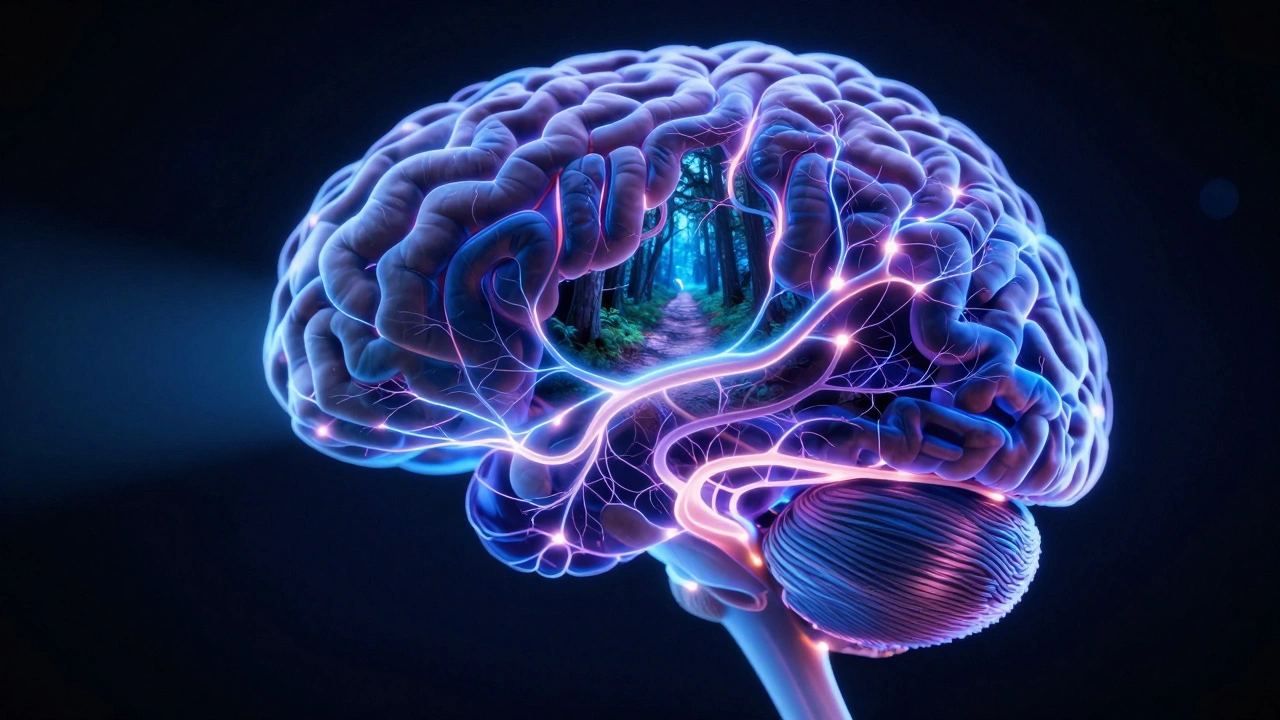
To understand why adult learning feels harder, we first need to look at what neuroplasticity is the brain's ability to reorganize itself by forming new neural connections throughout life. In childhood, the brain is like wet cement. It absorbs everything indiscriminately. This is efficient for survival but terrible for focus. As we age, the brain prunes away unused connections and strengthens the ones we use daily. This process is called synaptic pruning.
This efficiency is a double-edged sword. For an adult, learning something new requires breaking established pathways. Imagine trying to carve a new path through a dense, overgrown forest (your existing knowledge) versus walking on a paved highway (your habitual thinking). The child has no highways; they just wander. The adult has to actively clear brush. This takes more energy. It feels like struggle because it *is* physical effort. The brain consumes about 20% of your body’s energy despite being only 2% of its weight. When you force it to build new circuits, you feel mental fatigue. That’s not failure; that’s biology at work.
Cognitive Load: Why Multitasking Kills Learning
If biology is the terrain, then cognitive load theory is a framework describing the limited capacity of human working memory during learning. Working memory is the mental workspace where you hold information temporarily while processing it. Think of it as the RAM in your computer. Adults have roughly the same amount of RAM as they did at twenty. But here’s the catch: adults are constantly running background apps.
When you try to learn Python programming at 7 PM after a nine-hour shift, your working memory isn’t empty. It’s cluttered with emails, grocery lists, relationship worries, and physical exhaustion. This is called extraneous cognitive load. Every bit of irrelevant noise takes up space in your mental workspace. If your RAM is full, new data simply crashes. You don’t retain it. Most adults fail to learn not because they lack intelligence, but because they attempt to ingest complex information while their cognitive bandwidth is already maxed out by life stressors.
| Factor | Child Learner | Adult Learner |
|---|---|---|
| Mental Bandwidth | High availability, low external stress | Fragmented, high background noise |
| Existing Knowledge | Blank slate (low interference) | Dense network (high interference) |
| Learning Motivation | External (parents, teachers) | Internal (career, personal growth) |
| Error Tolerance | High (mistakes are part of play) | Low (fear of looking incompetent) |
The Interference Effect: Old Habits Fight Back
There is a phenomenon in psychology known as proactive interference. This happens when previously learned information gets in the way of learning new information. For example, if you’ve driven a car with an automatic transmission for twenty years, switching to a manual transmission will feel incredibly difficult. Your foot instinctively reaches for the brake when you mean to press the clutch. Your brain is literally fighting your conscious intent.
In professional settings, this is devastating. A manager trying to learn agile methodologies might keep falling back into command-and-control behaviors because those neural pathways are reinforced by decades of success. The struggle isn’t just about memorizing facts; it’s about unlearning. Unlearning is often harder than learning because you have to identify the hidden bias before you can replace it. Without explicit awareness of these old patterns, new information slides off the surface without sticking.

Emotional Barriers: Ego and Imposter Syndrome
We cannot talk about adult learning without addressing the elephant in the room: ego. Children learn without shame. They ask "why" until they get an answer. Adults, however, carry the weight of their identity. You are likely successful in your current role. Admitting you don’t know how to use a basic Excel formula threatens that self-image. This triggers imposter syndrome.
When you feel stupid, your amygdala-the brain’s threat detection center-lights up. It interprets confusion as danger. Once the amygdala activates, it inhibits the prefrontal cortex, which is responsible for higher-order thinking and learning. Essentially, fear shuts down your ability to think. Many adults quit learning not because the material is too hard, but because the emotional discomfort of feeling like a beginner is too painful to endure. Lowering the stakes and accepting "productive failure" is crucial for progress.
Outdated Study Methods: The Illusion of Competence
Most adults were taught to learn by rereading textbooks and highlighting notes. Research consistently shows these are among the least effective study methods. They create the illusion of competence. Because the text looks familiar when you see it again, your brain tricks you into thinking you know it. You don’t. You just recognize it.
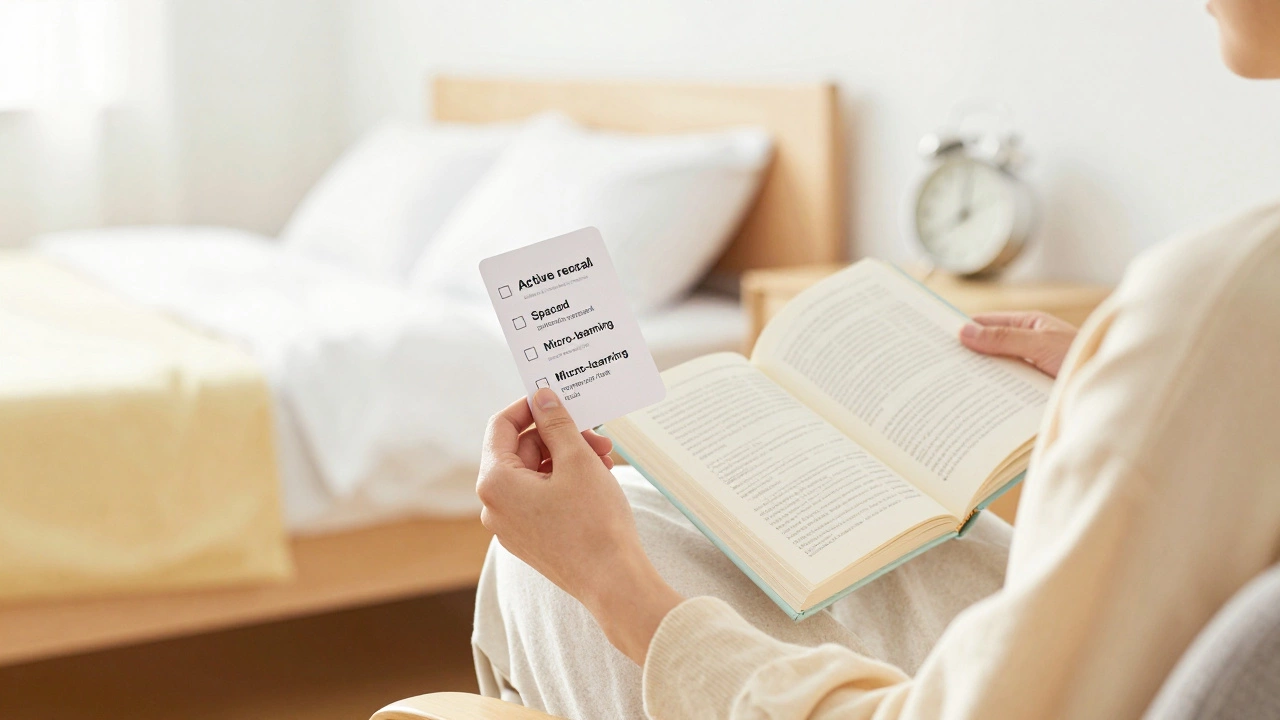
Effective learning requires retrieval practice. This means testing yourself without looking at the source material. It forces the brain to reconstruct the memory pathway, which strengthens it. Another powerful technique is spaced repetition is a learning technique that involves reviewing information at increasing intervals over time. Instead of cramming for five hours on Sunday, you review the material for ten minutes every day. This combats the forgetting curve, a concept introduced by Hermann Ebbinghaus in 1885, which shows that we forget 50% of new information within an hour if we don’t reinforce it.
How to Hack Your Adult Brain for Better Learning
So, how do you overcome these biological and psychological hurdles? You don’t fight them; you work with them. Here is a practical framework designed specifically for the adult learner.
- Protect Your Deep Work Blocks: Treat learning time like a meeting with your CEO. No phone, no email, no multitasking. Schedule 30-minute blocks when your energy is highest. For most people, this is early morning. If you must learn at night, ensure you are physically rested. Fatigue destroys retention.
- Use Active Recall: Stop rereading. Start quizzing. After reading a chapter, close the book and write down everything you remember. Then check what you missed. This pain of retrieval is where the learning happens.
- Apply the Feynman Technique: Try to explain the concept you just learned in simple terms, as if teaching a six-year-old. If you stumble or use jargon, you don’t understand it yet. Go back to the source. This exposes gaps in your knowledge immediately.
- Embrace Micro-Learning: Acknowledge your cognitive load limits. Break complex topics into tiny, manageable chunks. Learning one function in SQL is better than trying to grasp the entire database architecture in one sitting. Small wins build momentum and reduce anxiety.
- Reframe Failure as Data: When you make a mistake, don’t judge yourself. Analyze the error. What went wrong? Was it a lack of knowledge, a misunderstanding of instructions, or a slip in attention? Detach your ego from the outcome. You are a scientist observing an experiment, not a student taking a test.
The Role of Sleep in Memory Consolidation
You can study all day, but if you skip sleep, you throw away half your effort. During deep sleep, the brain replays the neural patterns activated during the day. This process, known as memory consolidation, moves information from short-term working memory to long-term storage. Studies show that adults who get less than seven hours of sleep perform significantly worse on cognitive tasks than those who get eight. Sleep isn’t just rest; it’s the save button for your brain. Prioritize it if you want to learn efficiently.
Conclusion: It’s Not About Age, It’s About Strategy
Adults struggle to learn because they apply child-like strategies to adult brains. They ignore their cognitive limits, let their egos block progress, and fail to use evidence-based techniques like spaced repetition and active recall. By understanding the mechanics of neuroplasticity and respecting the constraints of working memory, you can transform learning from a frustrating chore into a manageable, even enjoyable, process. The barrier isn’t your age. It’s your method. Change the method, and the results will follow.
Is it true that adults lose the ability to learn new things?
No, this is a myth. While the speed of raw data absorption may decrease slightly compared to childhood, adults retain the ability to form new neural connections through neuroplasticity. In fact, adults often learn faster than children in areas where they can leverage existing knowledge and logical reasoning skills.
Why does studying for hours sometimes result in remembering nothing?
This is often due to cognitive overload and passive study methods. If you spend hours rereading notes without testing yourself, you create familiarity, not mastery. Additionally, if you are tired or distracted, your working memory cannot encode the information effectively. Short, focused sessions with active recall are far more effective than long, passive marathons.
How can I overcome the fear of looking stupid when learning?
Recognize that confusion is a necessary part of the learning process, not a sign of incompetence. Reframe mistakes as data points that help you adjust your approach. Remind yourself that experts were once beginners. Focusing on the process rather than the immediate outcome reduces anxiety and keeps your prefrontal cortex engaged.
What is the best time of day for adults to learn?
For most adults, the early morning is ideal because willpower and cognitive resources are replenished after sleep. However, the best time is whenever you can guarantee a distraction-free environment. Consistency matters more than the specific hour. Protect this time fiercely from other obligations.
Does stress affect my ability to learn?
Yes, significantly. Chronic stress releases cortisol, which can inhibit the hippocampus, the part of the brain responsible for memory formation. High stress also occupies working memory with worry, leaving less bandwidth for new information. Managing stress through exercise, meditation, or adequate sleep is a prerequisite for effective learning.