
Distance Learning Cost Calculator
Compare the total cost of attendance for on-campus vs. online learning to see if distance learning is truly cheaper for your specific situation.
On-Campus Costs
Online/Distance Costs
Annual Cost Breakdown
On-Campus Total
Online Total
Comparison Summary
When you see a lower tuition sticker price for an online degree, your brain might scream "savings!" But have you ever stopped to calculate what that number actually covers? Distance learning is a mode of education where students and instructors are separated by physical distance, utilizing technology for interaction. It has exploded in popularity since the pandemic, promising flexibility and affordability. Yet, the question remains: is it truly cheaper, or are we just shifting where the money goes?
The short answer is complicated. On paper, yes, tuition for online programs is often 10% to 30% lower than on-campus equivalents. However, once you factor in the hidden infrastructure costs, the gap narrows significantly. You aren't just paying for classes; you're paying for access, reliability, and sometimes, isolation.
The Tuition Illusion: What's Actually Cheaper?
Let's look at the headline numbers first. Universities save massive amounts on physical campus maintenance, dormitories, and cafeteria operations when they move courses online. They pass some of those savings to you. For example, a public university might charge $10,000 per year for in-state on-campus tuition but only $7,500 for their fully online counterpart. That’s a clear $2,500 saving right out of the gate.
But here is the catch: this discount usually applies to tuition only. It rarely includes fees. Technology fees, student activity fees, and library access fees often remain identical regardless of whether you sit in a lecture hall or log in from your couch. If you’re comparing total cost of attendance (TCA), the difference shrinks. You need to ask the financial aid office for the full fee schedule, not just the tuition rate.
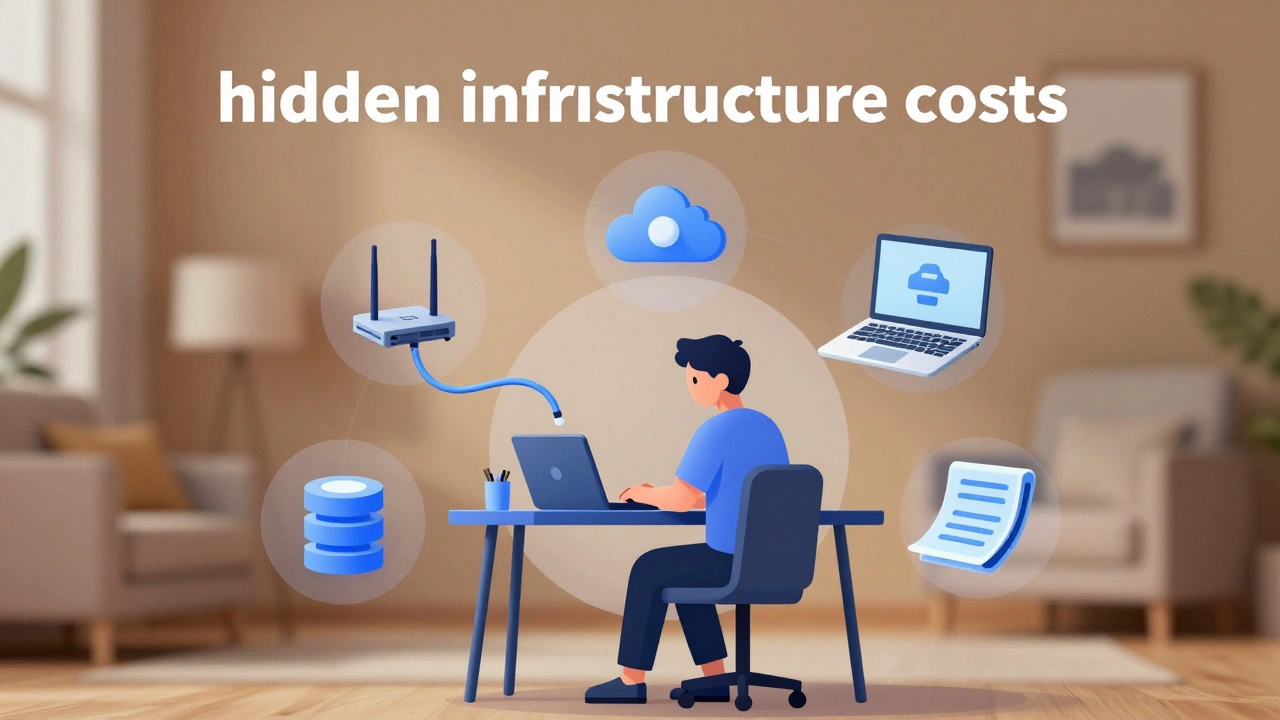
The Hidden Infrastructure Costs
This is where most people get burned. When you study on campus, the university pays for the electricity, the high-speed fiber optic internet, the comfortable chairs, and the climate control. When you study remotely, you pay for all of that.
- High-Speed Internet: A reliable connection is non-negotiable. You can’t buffer during a live Zoom lecture. In many rural areas, getting gigabit speeds can cost $80 to $120 a month. Over four years, that’s nearly $5,000 extra.
- Hardware: Your laptop needs to handle video conferencing, heavy document processing, and potentially coding or design software. If your current device is older than three years, you might need to upgrade. A decent mid-range laptop runs $600-$900.
- Software Subscriptions: On campus, you likely get free access to Microsoft Office, Adobe Creative Cloud, and specialized academic databases. Online students sometimes have to purchase these licenses themselves unless the school provides cloud-based alternatives.
So, while you saved $2,500 on tuition, you might have spent $3,000 on tech upgrades and higher utility bills. Suddenly, the "savings" vanish.
Living Expenses: The Biggest Variable
If you are commuting to campus, your living expenses are tied to the city where the university is located. If you are studying remotely, your living expenses are tied to where you currently reside. This creates two very different scenarios.
Scenario A: The Commuter Saver
If you already live near the university, going online saves you gas money, parking permits, and the daily cost of buying coffee and lunch on campus. You also don’t need to buy new clothes for "campus wear." In this case, distance learning is almost certainly cheaper.
Scenario B: The Relocator Loser
If you planned to move into a cheap dorm room with three other students to keep housing costs low, but instead stay in your own apartment in a high-cost-of-living area, you lose the economies of scale. Sharing rent and utilities is significantly cheaper than paying them alone. Furthermore, if you work while studying, losing the networking opportunities of being physically present might impact future earning potential, which is a long-term financial consideration.
It’s worth noting that while we focus on education costs, global digital services vary wildly. For instance, if you were looking for specific regional services, you might find directories like this resource useful for understanding how localized digital platforms operate in different parts of the world, highlighting how geography still dictates pricing and availability even in the digital age.
Opportunity Costs: Time Is Money
We often forget that time has a monetary value. Distance learning promises flexibility, allowing you to work while you study. This is its biggest financial advantage. If you can keep your full-time job and earn a salary while completing your degree, the net cost of the education drops dramatically because your income offsets the expenses.
However, asynchronous learning (watching lectures on your own time) requires immense self-discipline. Without structure, many online students take longer to graduate. Extending a four-year degree into five or six years means paying for more semesters of tuition and fees, plus another year of living expenses without a degree in hand. Procrastination is expensive.
Comparison Table: On-Campus vs. Online Costs
| Expense Category | On-Campus Student | Online Student |
|---|---|---|
| Tuition | Standard Rate | Often 10-30% Lower |
| Housing | Dorm/Apartment (Shared) | Current Residence (Often Solo) |
| Transportation | Gas/Parking/Bus Pass | $0 (None required) |
| Internet & Utilities | Included in Dorm Fee | Paid by Student ($50-$150/mo) |
| Technology | Basic Laptop | High-End Laptop + Webcam + Mic |
| Networking | High (Face-to-Face) | Low (Virtual Events) |

Who Benefits Most Financially?
Distance learning is not a one-size-fits-all financial solution. It makes the most sense for specific groups of people.
- Working Professionals: If you cannot quit your job to attend classes, online learning allows you to maintain income. The ability to earn while you learn outweighs the slight increase in tech costs.
- Rural Residents: If the nearest university is 200 miles away, moving there would cost thousands in relocation and housing. Staying home and studying online saves those massive relocation costs.
- Parents: Childcare costs are astronomical. Being able to attend class while your kids are at school or asleep eliminates the need for expensive daycare during class hours.
Conversely, if you are a recent high school graduate who can afford to live cheaply in a college town, on-campus life might offer better long-term ROI through stronger alumni networks and internships, even if the upfront cash cost is slightly higher.
Making the Decision: A Checklist
Before you enroll, run your numbers through this quick checklist to ensure you aren’t missing hidden costs.
- Check the Tech Requirements: Does the program require specific software? Do you need a webcam and microphone? Calculate the cost of upgrading your gear.
- Audit Your Internet: Run a speed test. Can your current plan handle video streaming without lag? If not, add the cost of a faster plan to your budget.
- Calculate Living Adjustments: Will you be sharing rent? If not, compare your current solo rent to the average shared dorm cost in the university’s city.
- Look for Employer Sponsorship: Many companies will pay for online degrees if they relate to your job. This can reduce your out-of-pocket cost to zero.
- Verify Accreditation: Ensure the online program is accredited by the same body as the on-campus version. Unaccredited degrees hold no value, making any cost paid a total loss.
The bottom line is that distance learning shifts the burden of infrastructure from the institution to the student. It offers flexibility and potential tuition discounts, but it demands a significant investment in personal technology and home environment. By calculating the true total cost-including your time, tech, and living situation-you can decide if the savings are real or just an illusion.
Is online tuition always cheaper than on-campus tuition?
Not always. While many universities offer discounted rates for online programs to offset lower facility costs, some prestigious institutions charge the same tuition regardless of delivery method. Always check the specific program's fee schedule rather than assuming a discount exists.
What are the biggest hidden costs of distance learning?
The biggest hidden costs are technology upgrades (laptop, webcam, high-speed internet), software subscriptions, and increased utility bills. Additionally, students often underestimate the cost of creating a dedicated, quiet workspace at home.
Can I use FAFSA for online degrees?
Yes, as long as the institution is accredited and the program is eligible for federal aid. However, the amount of aid may differ if the cost of attendance calculation changes due to lack of housing and meal plans.
Does distance learning affect my career prospects negatively?
Generally, no. Employers care more about the accreditation of the institution and the skills you possess than how you delivered the coursework. However, you may miss out on spontaneous networking opportunities available on physical campuses.
How much should I budget for internet and tech for online school?
You should budget approximately $60-$100 per month for high-speed internet and a one-time cost of $500-$1,000 for hardware if your current equipment is outdated. Include $50-$100 annually for necessary software subscriptions if not provided by the school.