Special Ed Communication Strategy Builder
Configure Your Situation
Select an age group and concern above to generate a personalized communication strategy based on expert guidelines.
You might have heard the old joke: "What's the best part about being a teacher? You get two summers off." But for parents of children with learning differences, there is no such thing as a summer break from worry. One of the most persistent fears hovering over family dinners and parent-teacher conferences is this: Does my child know they are different? And if they do, does it hurt?
The short answer is yes. Most children in special education a specialized instruction designed to meet the unique needs of students with disabilities know something is different. The real question isn't whether they know, but how they understand that difference. Do they see it as a deficit, or just a variation in how their brain works? This distinction shapes their self-esteem, their social interactions, and their future success.
How Children Perceive Their Own Differences
Children are incredibly observant. Long before they can articulate complex psychological concepts, they notice patterns. If every other student finishes a worksheet in ten minutes and your child needs forty-five, they notice. If peers read chapter books while they are still decoding sight words, they notice. This awareness usually begins between ages five and seven, coinciding with the development of theory of mind-the ability to understand that others have thoughts and perspectives different from one's own.
For a child with dyslexia a specific learning disability that affects reading accuracy and fluency, the difference is often visible in the classroom. For a child with ADHD Attention Deficit Hyperactivity Disorder, characterized by inattention and impulsivity, the feedback loop is immediate and constant from teachers and parents. These external cues act as mirrors, reflecting back to the child that their experience of the world is not the standard one.
However, knowing you are different is not the same as feeling broken. Young children often lack the context to label their struggles. They don't think, "I have a processing disorder." They think, "I am slow," or "I am bad at school." Without proper guidance, these neutral observations harden into negative self-talk. The goal of modern special education is not to hide the diagnosis, but to reframe the narrative from failure to difference.
The Role of Language and Diagnosis Disclosure
How we talk about learning disabilities neurological conditions that affect the brain's ability to receive, process, store, and respond to information matters immensely. In the past, many professionals advised keeping diagnoses secret from younger children to protect their innocence. Today, experts argue that secrecy breeds confusion and shame. When a child senses they are receiving extra help but doesn't know why, they often assume it's because they are failing.
Age-appropriate disclosure is key. For a six-year-old, you might say, "Your brain learns things differently than Sam's brain. That's why we practice reading together more often." For a teenager, the conversation shifts to strengths and strategies. It’s about moving from medical model language (disorder, defect) to neurodiversity-affirming language (difference, variation). This shift helps children view their Individualized Education Program (IEP) a legal document outlining specific educational goals and accommodations for a student with a disability not as a punishment, but as a toolkit.
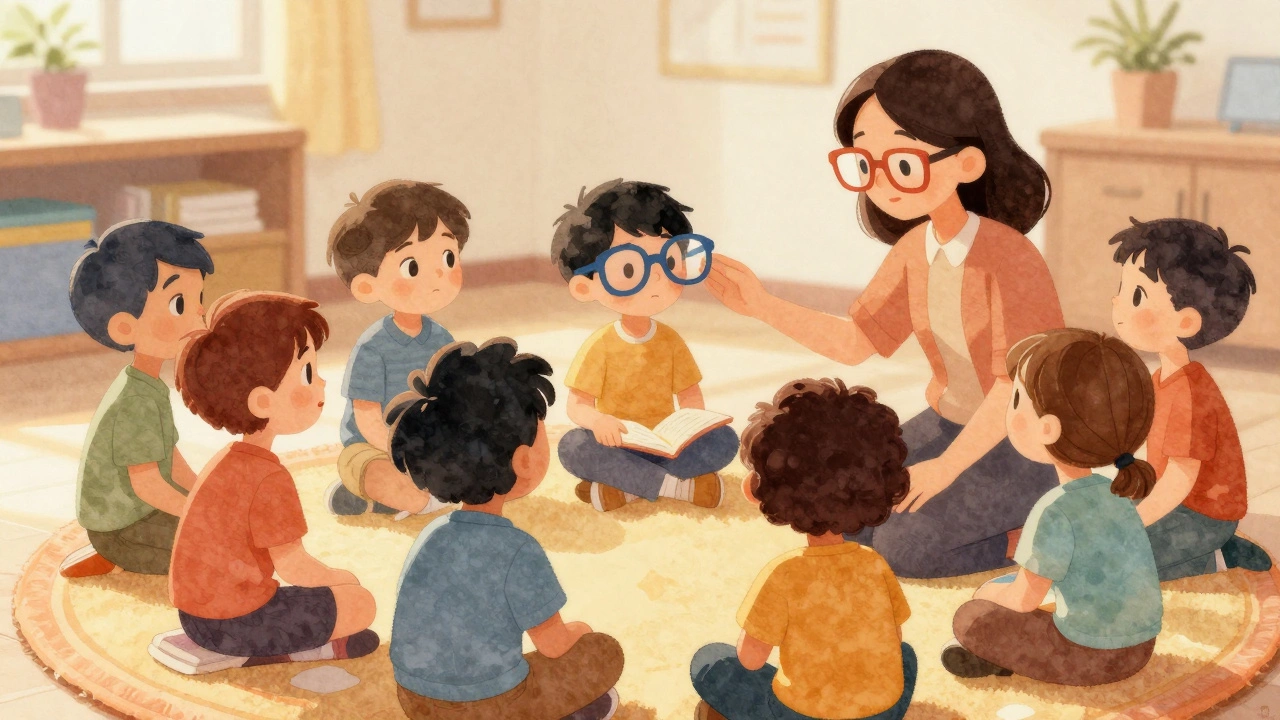
Consider the analogy of glasses. If a child has poor vision, we don't tell them to try harder to see. We give them glasses. Similarly, explaining that an IEP provides "glasses for the brain"-such as extended time, audio books, or quiet testing spaces-normalizes the accommodation. It removes the stigma of needing help.
Social Awareness and Peer Perception
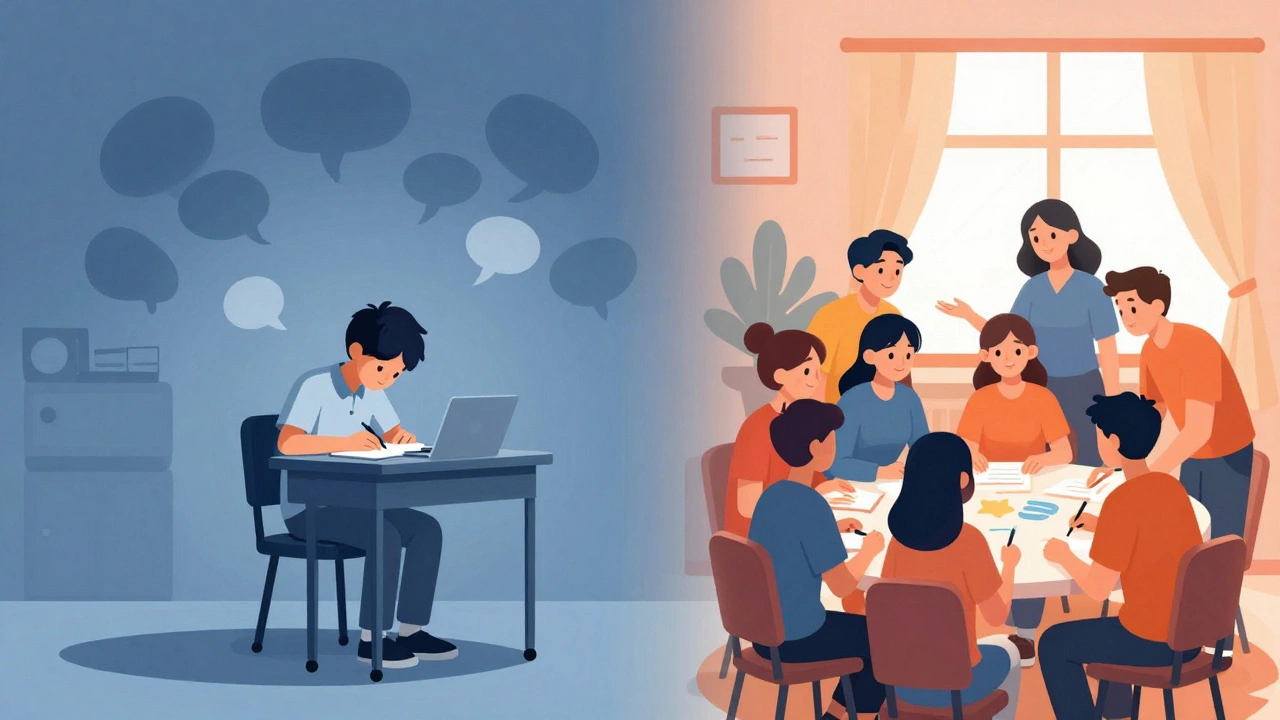
While academic differences are obvious in the classroom, social differences can be more subtle and painful. Children with Autism Spectrum Disorder (ASD) a developmental disorder marked by difficulties with social interaction and communication may struggle to read social cues, leading to awkward interactions. Children with emotional behavioral disorders may react strongly to minor frustrations. Peers notice these behaviors.
Research shows that by middle school, social exclusion becomes a significant risk for students with special needs. They know they are different socially, and they often internalize peer rejection as personal failure. This is where social skills training therapeutic interventions designed to improve interpersonal interactions becomes crucial. It’s not just about teaching them to fit in; it’s about teaching them to navigate a world that wasn't built for their neurotype.
Inclusive classrooms play a vital role here. When neurotypical peers learn about diversity through structured lessons, empathy increases. However, inclusion without support can lead to tokenism. True inclusion means adapting the environment so that all children can participate meaningfully. When a child with special needs is seen contributing to group projects or leading discussions, their sense of belonging grows, regardless of their diagnostic label.
Building Resilience Through Strengths-Based Approaches
To prevent the "deficit mindset" from taking root, educators and parents must actively highlight strengths. Every child with a learning difference has corresponding strengths. A child with ADHD may struggle with focus but excel in creative problem-solving. A child with dyscalculia may struggle with math but possess exceptional verbal reasoning skills.
This approach aligns with positive psychology the scientific study of what makes life most worth living, focusing on strengths rather than weaknesses. By celebrating what the child *can* do, we build a buffer against the frustration of what they *cannot* do yet. This doesn't mean ignoring challenges; it means addressing them with confidence rather than despair.
Practical steps include:
- Identify interests: Use the child's passions (dinosaurs, coding, art) as entry points for learning difficult subjects.
- Teach self-advocacy: Encourage older students to explain their needs to teachers themselves. This builds agency.
- Normalize struggle: Share stories of successful people who had similar challenges. Let them know they are not alone.

When to Seek Professional Support
While most children adapt well to understanding their differences, some develop anxiety or depression related to their status in special education. Watch for signs like refusal to go to school, sudden drops in grades, or expressions of hopelessness. If a child says, "I'm stupid," or "Nothing I do matters," it’s time to involve a school psychologist a professional who evaluates and supports students' mental health and learning needs.
Cognitive Behavioral Therapy (CBT) can be highly effective in helping children reframe negative thoughts. It teaches them to challenge automatic negative thoughts like "I always fail" with evidence-based counter-thoughts like "I struggled today, but I improved yesterday." This cognitive restructuring empowers children to take control of their emotional responses.
| Age Group | Primary Concern | Recommended Approach | Key Message |
|---|---|---|---|
| Ages 5-7 | Confusion about extra help | Simple analogies (glasses for ears/brain) | "Your brain works differently, and that's okay." |
| Ages 8-10 | Social comparison | Focus on effort and strategy | "We use different tools to solve problems." |
| Ages 11-13 | Identity formation | Introduce neurodiversity concept | "Your diagnosis explains your challenges, but doesn't define you." |
| Ages 14-18 | Future independence | Self-advocacy and legal rights | "You have the right to accommodations in college and work." |
The Long-Term Impact of Self-Awareness
Ultimately, the goal is not for the child to forget they are in special education, but to integrate that fact into a healthy identity. Adults who were successfully supported in special education often report that understanding their learning style was liberating. It stopped them from blaming themselves for struggles that were actually environmental mismatches.
When children know they are different, and when that difference is framed positively, they become resilient. They learn to ask for help, to seek out environments that suit their needs, and to appreciate their unique perspective. This self-knowledge is a superpower in a diverse world.
As parents and educators, our job is not to shield children from the truth, but to equip them with the language and confidence to own their story. By doing so, we help them transform a potential source of shame into a foundation for strength.
At what age should I tell my child they have a learning disability?
There is no single right age, but most experts recommend starting conversations as soon as the child notices they need extra help, typically around age 5 or 6. Use simple, positive language. Avoid complex medical jargon. The goal is to normalize the extra support they are receiving.
Will telling my child about their IEP make them feel stigmatized?
Secrecy often causes more stigma than disclosure. When children don't understand why they are pulled out of class or given different tests, they assume they are in trouble. Explaining the IEP as a set of helpful tools reduces shame and increases cooperation.
How can I help my child deal with bullying related to special needs?
First, ensure the school has a clear anti-bullying policy. Second, teach your child scripts to respond confidently. Third, foster strong friendships outside of school. Building a robust support network helps buffer against negative peer interactions.
Does special education affect a child's self-esteem?
It can, both positively and negatively. If the program focuses only on deficits, self-esteem may drop. If the program highlights strengths and provides appropriate challenges, self-esteem can improve as the child experiences success.
What is the neurodiversity paradigm?
Neurodiversity is the idea that neurological differences like autism, ADHD, and dyslexia are natural variations of the human genome, not defects to be cured. This perspective encourages acceptance and accommodation rather than assimilation.