Gendered Tutoring Title Translator
Select a language below to see how the word "Tutor" changes based on grammatical gender.
Masculine Form
Tutor
Feminine Form
Tutor
Usage Note:
In English, "Tutor" is completely gender-neutral. No feminine variation like "tutress" is used or recognized in modern standard English.
You’re writing a bio for your new business. You’ve got the qualifications, the experience, and the passion. But then you hit a snag. The form asks for your title. You type "Tutor." It feels neutral, safe, standard. But maybe you want something that reflects who you are more specifically. Or perhaps you’re learning Spanish or French and just discovered that nouns have genders, and you’re wondering: what is the feminine word for tutor?
Here’s the twist: in English, there isn’t one. Not really. Unlike many other languages, English has largely dropped grammatical gender from its professional titles. We don’t say "tutress" (though some might try). We don’t use "female tutor" as a formal title in the same way we might have used "actress" decades ago. This can be confusing if you’re coming from a background where language strictly categorizes everything by sex.
The Short Answer: English Doesn't Play By Those Rules
If you’re asking this question because you’re speaking English, the answer is simple: Tutor is a gender-neutral term used for anyone who teaches one-on-one or in small groups, regardless of their gender identity. There is no separate, widely accepted feminine noun like "waitress" or "hostess" that is currently in style for this profession.
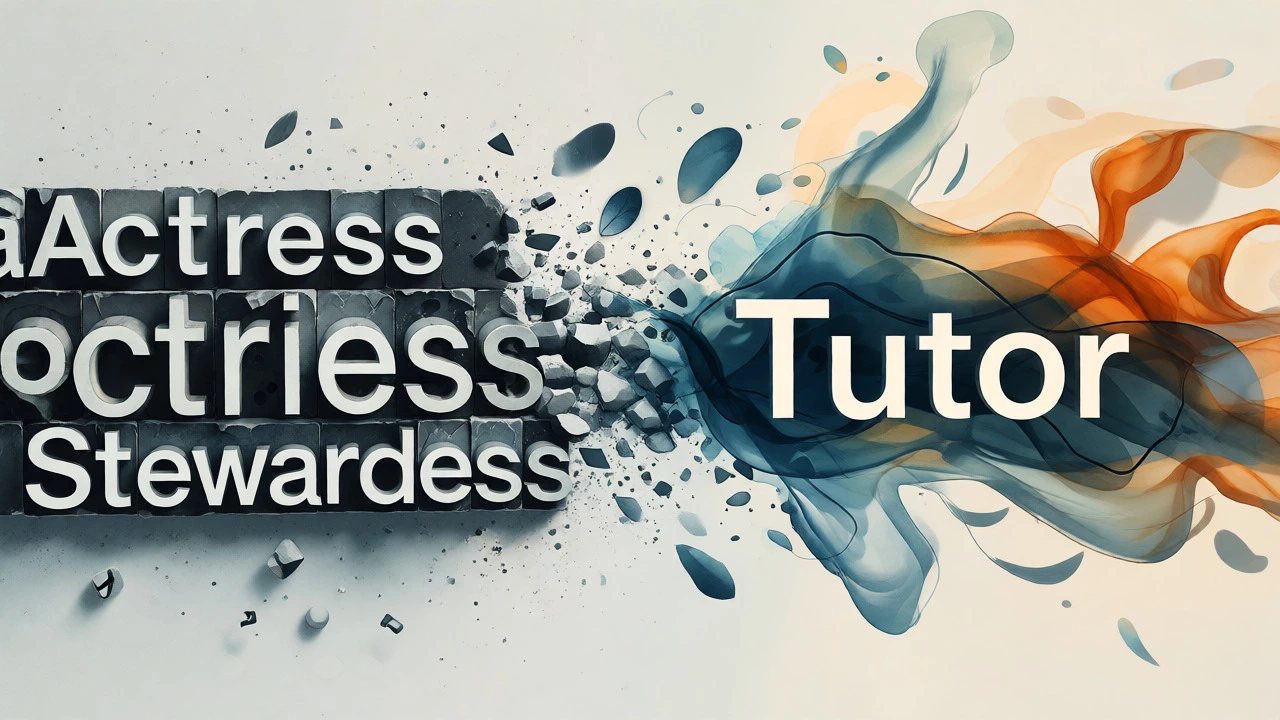
Why? Because English has been moving away from gendered job titles for about fifty years. In the 1970s and 80s, style guides began recommending neutral terms. "Stewardess" became "flight attendant." "Policewoman" became "police officer." "Chairman" became "chairperson" or just "chair." The logic was practical: it removes assumptions about who can do the job. If you call someone a "tutor," no one assumes they are male. If you call them a "male tutor," you’re adding information that usually isn’t necessary.
But what if you’re not speaking English? That’s where things get interesting-and complicated.
When Language Demands Gender: Romance Languages
If you’re learning or teaching in a Romance language, you can’t skip this step. These languages assign grammatical gender to almost every noun, including professions. Ignoring it makes you sound like a tourist who forgot to conjugate verbs.
In Spanish, the masculine form is 'tutor' and the feminine form is 'tutora'. Simple enough, right? Just swap the 'o' for an 'a.' But context matters. If you’re addressing a mixed group, you might hear debates about inclusive language. Some people use "los tutores y las tutoras," while others stick to the generic masculine "los tutores" to cover everyone, though that’s becoming less popular among younger speakers.
French follows a similar pattern. The masculine is 'tuteur' and the feminine is 'tutrice'. Notice the change isn’t just a vowel swap; the ending changes completely. This happens often in French. Think of "acteur" vs. "actrice" or "directeur" vs. "directrice." If you’re a woman offering services in Paris, using "tutrice" signals that you know the language well. Using "tuteur" might make people think you’re quoting a textbook or haven’t learned the nuances yet.
What about Italian? It’s "tutore" for men and "tutrice" for women. Portuguese? "Tutor" and "tutora." See the pattern? If the language has gendered nouns, there is almost always a feminine equivalent. Your job is to learn which suffix applies to your specific role.
The Germanic Approach: Compound Words
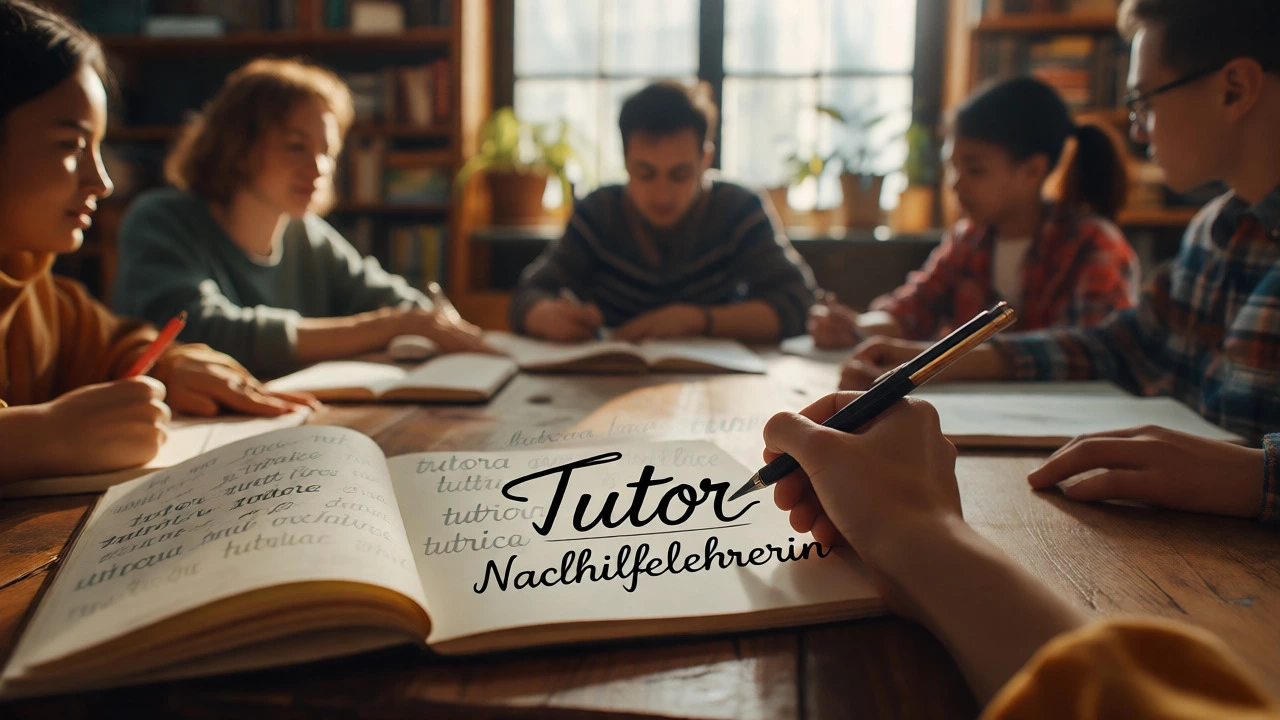
German handles gender differently than Spanish or French. Instead of changing the end of the word, German often uses compound words or distinct endings. For "tutor," the standard term is Nachhilfelehrer (male) or Nachhilfelehrerin (female). The '-in' suffix is the key marker for feminine professions in German.
This system is rigid but logical. Once you learn that '-in' means female, you can spot it everywhere: "Lehrer" becomes "Lehrerin" (teacher), "Arzt" becomes "Ärztin" (doctor). However, modern German is evolving too. You’ll see the "Binnen-I" (like Lehrerin) or the star method (Lehrer*in) used to include non-binary individuals. If you’re writing a profile for a German platform, check their style guide. They might prefer the neutral plural or a specific inclusive format over the traditional feminine singular.
Slavic Languages: Complex Endings
If you’re dealing with Russian, Polish, or Czech, prepare for more complexity. These languages have rich morphological systems where gender affects adjectives, verbs, and nouns alike.
In Russian, the word for tutor is 'репетитор' (repetitor) for males and 'репетиторша' (repetitorsha) for females. Wait-did you catch that? 'Repetitorsha' has a slightly informal, sometimes pejorative tone. It’s like calling a female doctor a "doctress" in old English. Many educated women in Russia prefer to use the masculine form 'repetitor' even when referring to themselves, because it sounds more professional and less diminutive.
Polish works similarly. "Korepetytor" is male, "korepetytorka" is female. Again, the feminine form can carry connotations of informality. In professional settings, especially in academia or high-end private tutoring, many women opt for the masculine grammatical form to emphasize their credentials over their gender. It’s a subtle power move: "I am a tutor" rather than "I am a female tutor."
Why Does This Matter for Private Tutoring?
You might think, "Who cares? Parents just want someone good at math." And you’re mostly right. Competence trumps terminology. But language shapes perception. Here’s why getting the terminology right matters in the marketplace:
- Trust and Authority: Using the correct, respectful term for the target audience shows cultural competence. If you’re marketing to Spanish-speaking parents in Miami, using "tutora" correctly builds immediate rapport. Misusing it can make you seem out of touch.
- SEO and Searchability: People search differently. A parent looking for a female teacher might type "female tutor near me" or "tutora online." If your profile doesn’t match those keywords, you lose visibility. In English, since "tutor" is neutral, you rely on modifiers like "female tutor" or "woman tutor" in your bio text, not your title field.
- Brand Identity: Are you positioning yourself as a nurturing mentor or a strict academic coach? Sometimes, choosing a different title entirely helps. "Educator," "Coach," "Mentor," or "Instructor" are all strong alternatives that avoid the gender debate entirely while sounding professional.

Alternatives to "Tutor" That Sound More Professional
If you feel stuck on the gender issue-or just want to stand out-consider swapping "tutor" for a synonym. These terms are inherently gender-neutral in English and often command higher rates because they imply a broader scope of expertise.
| Title | Connotation | Best For | Gender Neutrality |
|---|---|---|---|
| Tutor | Academic support, homework help | K-12 students, test prep | High |
| Instructor | Structured lessons, skill-based | Languages, music, coding | High |
| Coach | Goal-oriented, performance focus | Sports, executive skills, SAT prep | High |
| Mentor | Long-term guidance, career advice | College applications, internships | High |
| Educator | Broad, philosophical approach | Homeschooling, alternative education | High |
Notice how none of these require a feminine version? "Coach" doesn’t become "coachee" (that’s the student). "Mentor" stays "mentor." This simplicity is why many professionals shift toward these terms. It removes the barrier of entry for clients who might be confused by archaic gendered forms.
Cultural Nuances: When to Use Feminine Terms Anyway
Even in English, there are times when specifying gender is helpful. Imagine a parent looking for a role model for their daughter. They might specifically seek a "female tutor" not because of the title, but because of the personal connection. In this case, "female tutor" is a descriptive phrase, not a grammatical category.
Also, consider historical contexts. If you’re reading older literature, you might encounter "governess" or "preceptress." These are obsolete today. Don’t use them unless you’re writing a period piece. "Governess" implies living in the house and managing children’s entire upbringing, which is very different from modern hourly tutoring.
There’s also the rise of non-binary identities. English is actually ahead here. Since "tutor" is already neutral, non-binary tutors don’t need to invent new words. They just use "tutor." Compare this to French, where creating a neutral third-gender pronoun and noun is an ongoing political and linguistic battle. If you’re working internationally, remember that your ease in English is a privilege of the language’s structure, not a universal norm.
Practical Tips for Your Profile
So, what should you actually write on your Wyzant, Varsity Tutors, or personal website profile?
- Stick to "Tutor" in the Title Field: Keep it clean. Let the algorithm find you based on subject matter (Math, Spanish, Piano).
- Mention Gender in the Bio if Relevant: If you believe being a female tutor adds value for your niche (e.g., supporting young girls in STEM), mention it naturally. "As a female engineer and tutor, I encourage young women..."
- Use Keywords for SEO: Include phrases like "female math tutor" or "women-led tutoring service" in your tags. This captures searches without cluttering your official title.
- Check Local Norms: If you’re teaching abroad, ask a local colleague. Would they call you "la profesora" or "el profesor"? Do they expect "tutora"? Mimic the local usage to build trust.
Ultimately, the best title is the one that accurately describes what you do. Whether you’re a tutor, tutrice, tuteur, or Nachhilfelehrerin, your impact comes from your patience, knowledge, and ability to connect with students. The label is just the wrapper. Make sure the package inside is worth opening.
Is "tutress" a real word?
No, "tutress" is not a recognized word in modern English dictionaries. While it follows the pattern of "waitress" or "hostess," it never gained widespread acceptance. Most style guides recommend using the gender-neutral "tutor" instead.
How do I address a female tutor in Spanish?
You would refer to her as "la tutora" or simply "tutora." For example, "Mi hija tiene una tutora de matemáticas" (My daughter has a female math tutor). Avoid using the masculine "tutor" unless you are unsure of her preference, as it may sound impersonal.
Are there any gender-neutral synonyms for tutor?
Yes, several. "Educator," "instructor," "coach," "mentor," and "facilitator" are all gender-neutral terms. They are often perceived as more professional or broad-spectrum than "tutor," depending on the context.
Does using a feminine title affect my pay rate?
Not directly. Pay rates are determined by demand, qualifications, and location. However, some niches (like language immersion or early childhood development) may see higher demand for female tutors due to parental preferences, which could indirectly influence market rates.
What is the feminine word for tutor in French?
The feminine form is "tutrice." The masculine form is "tuteur." Remember to adjust articles accordingly: "un tuteur" (a male tutor) vs. "une tutrice" (a female tutor).