Tutoring Session Duration Planner
Recommended Session Structure
Ideal Total Duration
| Phase | Time | Activity Focus |
|---|
Picture this: you’ve scheduled a tutoring session is a structured educational meeting between a tutor and a student designed to reinforce learning, clarify concepts, and build academic confidence. You’re excited. The student is ready. But after forty-five minutes of intense focus on algebraic equations, the eyes glaze over. The pen stops moving. The energy drains out of the room like air from a punctured tire. You push for ten more minutes, but the retention rate drops to near zero. Sound familiar?
Many tutors make the mistake of assuming that more time equals better results. In reality, cognitive science suggests otherwise. The length of a tutoring session isn’t just about fitting content into a calendar slot; it’s about aligning with human biology and psychology. If you get the timing wrong, you waste money, frustrate students, and burn out yourself. So, what is the sweet spot? It depends entirely on who you are teaching and what you are teaching.
The Science Behind Attention Spans
Before we dive into specific minute counts, let’s look at why time matters so much. The brain operates in cycles. During focused study, the prefrontal cortex works hard to process new information. This consumes glucose and mental energy. After a certain period, cognitive fatigue sets in. This isn’t laziness; it’s biology.
Research in educational psychology consistently points to the concept of "attention spans" varying significantly by age. For younger children, these windows are short. As students mature, their ability to sustain focus increases, but it never becomes infinite. Even adults hit a wall. Most studies suggest that without breaks, effective concentration peaks around 45 to 60 minutes for complex tasks. Beyond that, the law of diminishing returns kicks in hard. You might cover more material, but the student retains less of it.
This is why understanding the difference between passive listening is receiving information without active engagement, often leading to lower retention rates and active recall is the practice of retrieving information from memory, which strengthens neural pathways and improves long-term retention is crucial. A shorter session focused on active recall is far superior to a long session of passive explanation.
Ideal Session Lengths by Age Group
One size does not fit all when it comes to scheduling. A five-year-old has vastly different needs than a high school senior preparing for college entrance exams. Here is a breakdown based on developmental stages:
- Early Elementary (Ages 5-7): Keep sessions to 30 minutes or less. At this age, children are still developing basic executive function skills. Thirty minutes is often the maximum they can handle before needing physical movement or a complete change of pace. Anything longer usually results in behavioral issues rather than learning gains.
- Upper Elementary (Ages 8-10): Aim for 45 minutes. These students have slightly longer attention spans and can engage in more structured activities. However, a 10-minute break halfway through is highly recommended to reset their focus.
- Middle School (Ages 11-13): One hour is standard. Middle schoolers face increasing academic pressure and can handle sustained focus. They also benefit from social interaction, so a one-hour block allows enough time to build rapport while covering substantial ground.
- High School (Ages 14-18): 60 to 90 minutes. High school students often need deeper dives into complex subjects like calculus or physics. Ninety-minute sessions allow for thorough problem-solving and discussion. However, ensure there is variety within that hour to prevent boredom.
- Adult Learners: 60 minutes. Adults usually have specific goals and limited free time. They appreciate efficiency. A solid hour allows for meaningful progress without encroaching too much on their personal lives.
Subject Complexity Matters Too
Age isn’t the only factor. The subject matter plays a huge role in determining optimal session length. Not all topics require the same cognitive load.
For example, Language acquisition is the process of learning a new language, which benefits from frequent, shorter interactions to reinforce vocabulary and grammar patterns thrives on consistency rather than duration. Shorter, daily sessions of 30 minutes are often more effective for language learning than weekly three-hour marathons. The brain needs sleep to consolidate new linguistic data. Frequent exposure helps cement these connections.
In contrast, STEM subjects is Science, Technology, Engineering, and Mathematics disciplines that often require deep, uninterrupted focus to solve complex problems like mathematics or physics may require longer blocks. Solving a multi-step calculus problem takes time. Breaking it up every 30 minutes might interrupt the logical flow. Here, a 60-to-90-minute session allows the student to enter a state of flow, where they can tackle challenging concepts without constant interruption.
| Age Group | Standard Duration | Language Arts | STEM Subjects |
|---|---|---|---|
| Ages 5-7 | 30 mins | 20-30 mins | 20-30 mins |
| Ages 8-10 | 45 mins | 30-45 mins | 30-45 mins |
| Ages 11-13 | 60 mins | 45-60 mins | 60 mins |
| Ages 14-18 | 60-90 mins | 60 mins | 60-90 mins |
| Adults | 60 mins | 45-60 mins | 60 mins |

The Dangers of Over-Scheduling
It’s tempting to think that if an hour works, two hours must be twice as good. This is a common pitfall. Extending sessions beyond the optimal window leads to several negative outcomes:
- Cognitive Overload: The brain simply stops absorbing new information. Students may nod along, but nothing sticks. This creates an illusion of productivity.
- Negative Association: Long, grueling sessions can make students resent tutoring. Instead of seeing it as helpful support, they view it as punishment. This damages motivation.
- Tutor Burnout: Teaching is mentally exhausting. Tutors who schedule back-to-back two-hour sessions often find themselves drained by mid-afternoon, affecting the quality of instruction.
- Diminished Returns: Studies show that learning efficiency drops sharply after the first hour of continuous study. You’re paying for time, but getting less value per minute.
If you feel you need more time, consider splitting it. Two 45-minute sessions spread across the week are often more effective than one 90-minute marathon. This approach leverages the spacing effect, a psychological phenomenon where information is better remembered when study sessions are spaced out over time.
Structuring the Time Effectively
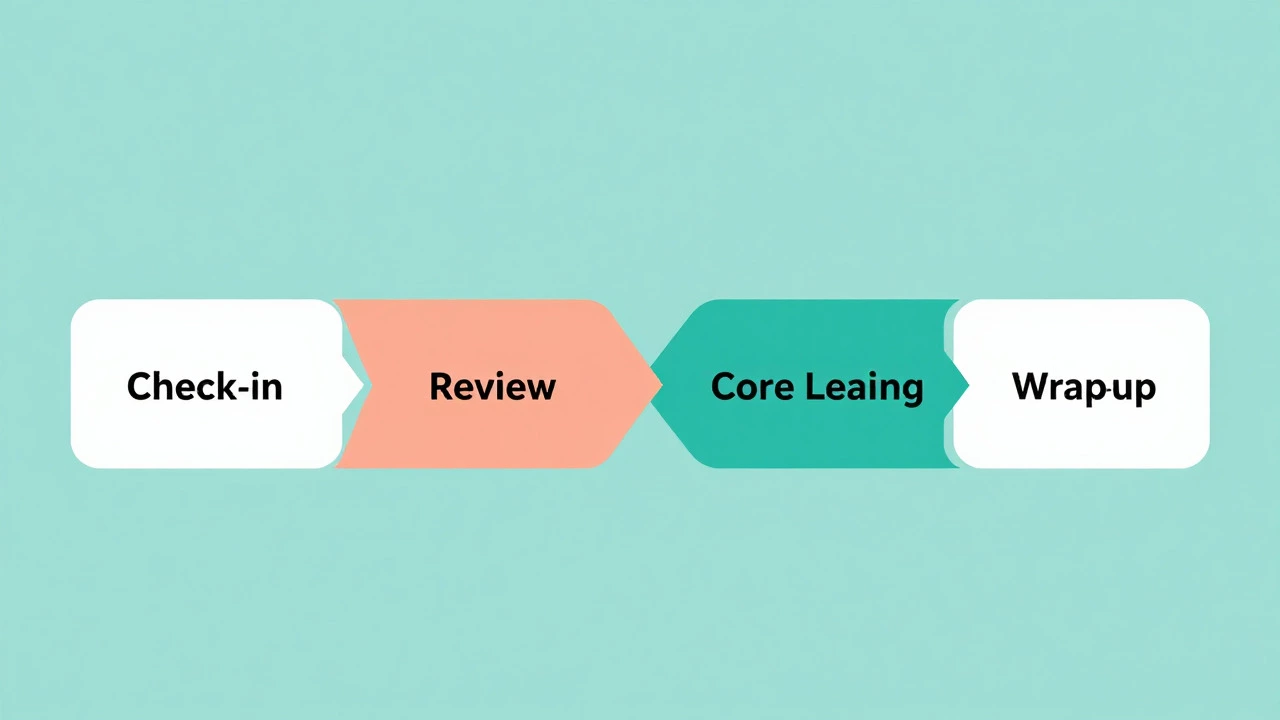
Knowing how long to tutor is only half the battle. How you use that time determines success. A well-structured session keeps energy levels high and maximizes retention. Here’s a simple framework for a standard 60-minute session:
- First 5 Minutes: Check-in and Goal Setting. Start with a brief conversation. Ask how the student is doing. Review what was covered last time. Set a clear goal for today’s session. This builds rapport and provides direction.
- Next 10 Minutes: Warm-up and Review. Do a quick review of previous material. This activates prior knowledge and prepares the brain for new input. Use low-stakes questions to build confidence.
- Core 35 Minutes: New Content and Practice. This is the meat of the session. Introduce new concepts, work through examples together, and then let the student practice independently. Switch between explanation and activity every 10-15 minutes to maintain engagement.
- Last 10 Minutes: Wrap-up and Preview. Summarize key takeaways. Assign homework if necessary. Preview what will be covered next time. End on a positive note to leave the student feeling accomplished.
This structure ensures that every minute has a purpose. It prevents aimless wandering and keeps both tutor and student focused. For shorter sessions, compress these phases proportionally. For longer sessions, add more independent practice time.
Signs Your Session Length Needs Adjustment
Every student is unique. While general guidelines help, you need to watch for cues that indicate your current setup isn’t working. Pay attention to these red flags:
- Fidgeting and Restlessness: If the student is constantly shifting in their seat, playing with objects, or looking away, they may be reaching their limit. Consider shortening the session or adding more movement breaks.
- Repeated Questions: If the student keeps asking the same question despite multiple explanations, they might be too fatigued to process the answer. Take a break or end the session early.
- Declining Performance: If errors increase as the session progresses, it’s a sign of mental fatigue. Better to stop while they’re still succeeding than to continue and reinforce mistakes.
- Dread or Anxiety: If the student seems anxious about upcoming sessions or complains frequently, the duration might be too long. Try reducing the time and see if their attitude improves.
On the flip side, if the student asks for more time, loses track of time during the session, or shows high energy throughout, you might be able to extend the duration slightly. Always communicate openly with parents and students about what feels right.
Flexibility Is Key
While having a standard duration helps with scheduling and billing, flexibility is essential for effective tutoring. Some days, a student might need extra help with a particularly tough topic. Other days, they might breeze through everything and finish early. Be prepared to adapt.
Consider offering flexible packages. Instead of rigid hourly slots, some tutors offer credit-based systems where students can choose between shorter, frequent sessions or longer, intensive ones depending on their needs. This approach respects the individuality of each learner.
Also, remember that online tutoring dynamics differ from in-person sessions. Screen fatigue is real. Many educators recommend keeping virtual sessions slightly shorter-perhaps 45 minutes instead of 60-to account for the additional strain of staring at a screen. Ensure your technology setup supports smooth interaction to minimize frustration.
Final Thoughts on Timing
There is no single magic number for how long a tutoring session should last. The ideal duration balances biological limits, subject complexity, and individual student needs. For most elementary students, 30 to 45 minutes is sufficient. Middle and high schoolers typically benefit from 60 minutes. Adults and advanced high school students may thrive with 60 to 90 minutes, provided the content remains engaging.
The goal isn’t to fill time; it’s to facilitate learning. By respecting attention spans and structuring sessions effectively, you create an environment where students can succeed without burning out. Watch for signs of fatigue, adjust as needed, and always prioritize quality over quantity. When done right, tutoring becomes a powerful tool for growth, not a chore to endure.
What is the average length of a private tutoring session?
The average length of a private tutoring session is typically 60 minutes. This duration strikes a balance between providing enough time for meaningful instruction and avoiding cognitive fatigue. However, this varies by age group, with younger children often needing shorter sessions of 30 to 45 minutes.
Is a 30-minute tutoring session enough?
Yes, a 30-minute session can be very effective, especially for younger children (ages 5-7) or for specific, focused tasks like vocabulary drills or quick homework help. For older students or complex subjects, 30 minutes might be too short to cover substantial ground, but it can still provide valuable reinforcement if used consistently.
Should I do one long session or two shorter ones?
Two shorter sessions are generally more effective than one long session due to the spacing effect. Spacing out study time allows the brain to consolidate information during rest periods, leading to better long-term retention. For example, two 45-minute sessions per week are often superior to one 90-minute session.
How does online tutoring affect session length?
Online tutoring often requires slightly shorter sessions compared to in-person tutoring. Screen fatigue can set in faster, making it harder for students to maintain focus. Many tutors recommend capping virtual sessions at 45 minutes to ensure high-quality interaction and prevent eye strain and mental exhaustion.
Can I extend a session if the student is engaged?
Yes, if a student is highly engaged and showing strong comprehension, extending the session slightly can be beneficial. However, be cautious of hidden fatigue. Even enthusiastic students can become mentally exhausted. It’s often better to end on a high note and schedule another session soon rather than pushing too far in one sitting.