Homeschool Burnout & Cost Estimator
Calculate the hidden costs of homeschooling beyond textbooks. This tool estimates the risk of parental burnout and total annual financial impact based on workload, outsourcing, and support systems.
You hear the horror stories at dinner parties: homeschooled kids who never learned to wait in line, who can’t handle a group project, or who struggle to make eye contact. But if you ask parents who actually went through it, the answer to "what is the biggest disadvantage of homeschooling?" is rarely about their child’s inability to play soccer. It’s usually about something far more internal and draining: parental burnout combined with the sheer logistical weight of being teacher, administrator, and cheerleader all at once.
It’s not that homeschooling doesn’t work. Data from the National Home Education Research Institute suggests that homeschooled students often score above average on standardized tests. The problem isn’t the outcome; it’s the process. When you pull your kid out of school, you don’t just change where they learn. You change how your entire family functions. If you’re considering this path, you need to look past the romanticized idea of nature walks and flexible schedules to see the real friction points.
The Myth of Social Isolation
Let’s clear the air first. The most common criticism-socialization-is often misunderstood. People assume homeschooled kids are isolated hermits. In reality, many homeschoolers are deeply embedded in their communities because they aren’t stuck in a building for seven hours a day. They’re at libraries, museums, sports leagues, and volunteer gigs. A study published in the Journal of College Admission found no significant difference in college adjustment between homeschooled and traditionally schooled students.
However, there is a nuance here. While isolation isn’t guaranteed, peer diversity is harder to replicate. Schools force you to interact with people you didn’t choose-different economic backgrounds, different learning speeds, different personalities. In homeschooling, you curate the environment. If you live in a homogeneous suburb and only join one co-op, your child might miss out on the messy, unfiltered social friction that teaches resilience. This isn’t fatal, but it requires intentional effort. You have to actively seek out diverse groups, which takes time and energy many parents underestimate.
The Real Killer: Parental Burnout and Role Confusion
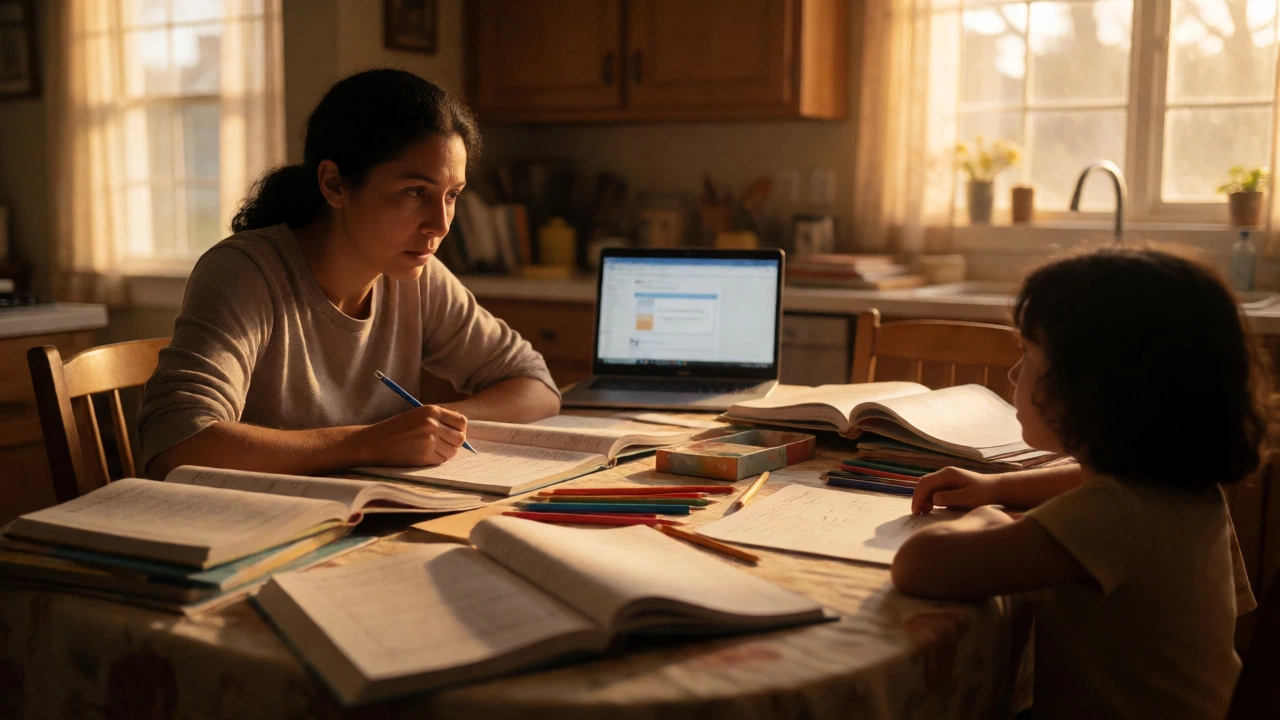
This is where the rubber meets the road. When you homeschool, you lose the boundary between parent and teacher. At 3 PM, when your child asks why the sky is blue for the tenth time, you aren’t just their mom or dad-you’re also the science curriculum provider. This dual role creates emotional fatigue.
Consider the logistics. You aren’t just teaching math. You’re grading papers, updating records, planning lessons, buying supplies, and handling administrative paperwork. According to the U.S. Department of Education, homeschooling parents spend an average of five to seven hours per day on instructional activities. That’s a full-time job without a lunch break, commute, or colleagues to vent to. Many parents report feeling guilty when they snap at their kids, not because the child was bad, but because the parent was exhausted from trying to be perfect.
If you work from home while homeschooling, the pressure doubles. You’re trying to meet professional deadlines while ensuring your child learns fractions. The result? Both suffer. Work quality drops, and education becomes rushed. This isn’t a lack of discipline; it’s a structural limitation. Humans aren’t designed to switch contexts that rapidly, repeatedly, for years on end.
Academic Gaps and Curriculum Blind Spots
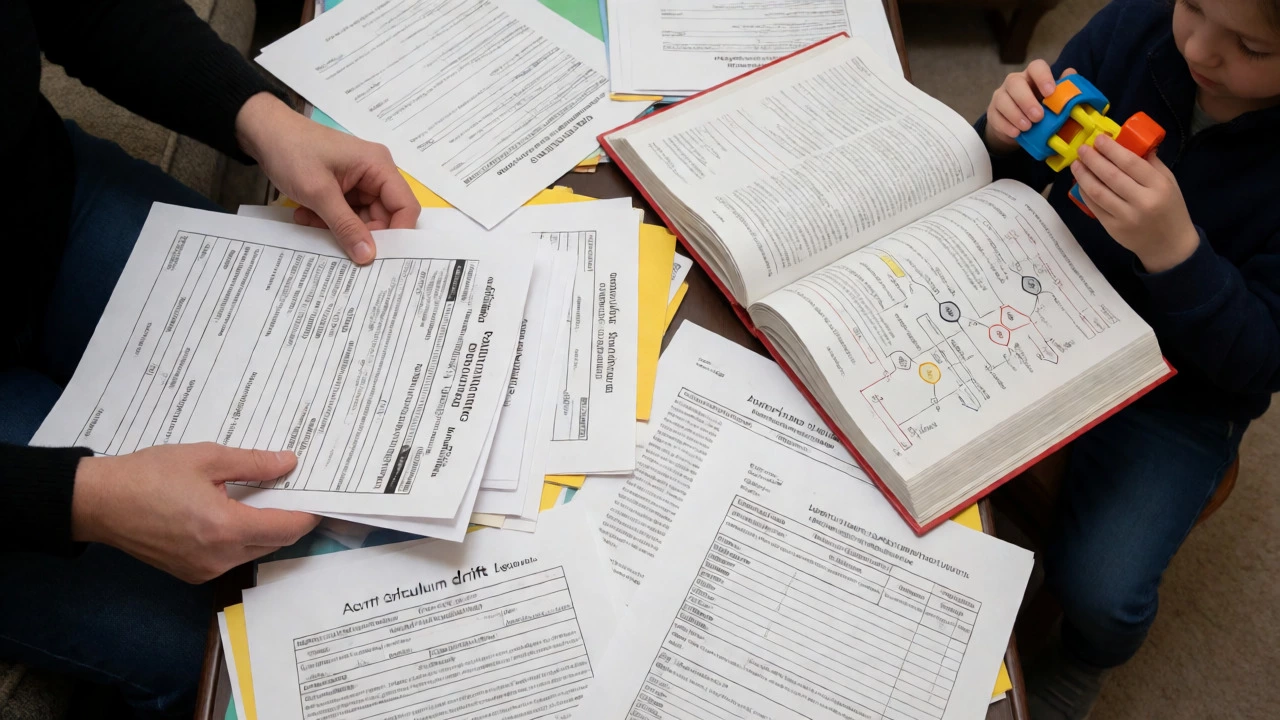
Schools have specialists. The math teacher knows calculus. The history teacher knows the Civil War. As a parent, you likely know one thing well and tolerate the rest. This leads to what educators call "curriculum drift." You might excel at teaching reading but gloss over chemistry because you find it boring or difficult. Over time, these small gaps accumulate.
By high school, this becomes critical. Colleges look for rigor. If your child hasn’t taken advanced biology because you didn’t feel confident teaching it, they might enter university underprepared compared to peers who had lab access and specialized instruction. You can hire tutors, but that costs money and adds scheduling complexity. You can use online platforms like Khan Academy or Outschool, but those require self-discipline-a skill many teens haven’t mastered yet.
| Subject | Parent Challenge | Mitigation Strategy |
|---|---|---|
| Advanced Math | Difficulty explaining abstract concepts clearly | Use video tutorials (e.g., Khan Academy) + tutor for feedback |
| Laboratory Sciences | Lack of equipment and safe space for experiments | Join local STEM co-ops or use virtual labs |
| Foreign Language | Poor pronunciation and limited conversation practice | Hire native speaker tutors or use immersion apps |
Legal and Administrative Headaches
People often forget that homeschooling is regulated. Laws vary wildly by state. In Vermont, where I live, you must submit a notice of intent and keep detailed portfolios. In other states, you might need standardized testing every year. Missing a deadline can mean fines or even losing your right to homeschool.
This bureaucratic layer adds stress. You become the registrar, the auditor, and the compliance officer. If you move to a new state, you have to relearn the rules. Some districts are supportive; others are skeptical and make you jump through hoops. Keeping track of attendance records, immunizations, and curriculum outlines sounds minor until you’re doing it for three kids simultaneously. One missed form can trigger a truancy check, which feels invasive and stressful.

The Financial Reality Check
Homeschooling isn’t free. Textbooks, workbooks, art supplies, field trips, and co-op fees add up. For a family of four, annual costs can range from $500 to $1,500 per child, depending on resources used. But the bigger cost is opportunity loss. Often, one parent reduces work hours or quits entirely to manage the schedule. That lost income is the hidden price tag.
Compare this to public school, where tuition is zero (though you still buy supplies). Or private school, where you pay for structure. With homeschooling, you pay with time and potential earnings. If you’re single-income, this strain can cause marital tension. Money arguments often mask deeper issues about workload distribution and fairness.
How to Mitigate the Downsides
So, should you avoid homeschooling? Not necessarily. Most disadvantages are manageable if you plan ahead. Here’s how experienced families handle them:
- Set Boundaries: Treat school hours like a job. Start at 9 AM, stop at 3 PM. No teaching during dinner. This protects your relationship with your child.
- Outsource Weaknesses: Don’t teach calculus if you hate it. Buy a course or hire a tutor. Your mental health matters more than saving $50.
- Build a Network: Join a local homeschool group. You need adult friends who understand the struggle. Your kids need peers who aren’t siblings.
- Document Everything: Keep a simple folder for records. Use digital tools to track progress. Don’t wait until December to organize September’s work.
The biggest disadvantage isn’t a flaw in the method-it’s a mismatch between expectations and reality. If you think homeschooling will give you more free time, you’ll be disappointed. If you view it as a labor-intensive choice that buys you flexibility and customization, you’ll be prepared for the work.
Is socialization really a problem for homeschooled children?
Not inherently. Studies show homeschooled children often develop strong communication skills and interact well with adults. However, they may have fewer opportunities for unstructured peer interaction compared to school settings. Parents must actively create social outlets through sports, clubs, and community events to ensure diverse social experiences.
Do colleges accept homeschooled applicants?
Yes, most universities actively recruit homeschooled students. Admissions officers value independence and unique projects. However, you must provide clear transcripts and test scores (SAT/ACT) to demonstrate academic readiness. Strong letters of recommendation from non-family members help validate achievements.
How much does homeschooling cost annually?
Costs vary widely. Basic curricula can cost $50-$100 per subject per year. Comprehensive programs, co-ops, and extracurriculars can push this to $1,000+ per child. The largest financial impact is often the reduction in household income if a parent leaves the workforce to manage schooling.
Can both parents work while homeschooling?
It is challenging but possible. It requires strict scheduling, asynchronous learning tools, and possibly part-time childcare or co-op arrangements. Success depends on the child's age and ability to work independently. Younger children require more direct supervision, making dual careers harder to sustain without external support.
What happens if we decide homeschooling isn't working?
Transitioning back to traditional school is straightforward. Most schools accept mid-year transfers if you provide grades and attendance records. Ensure you keep detailed portfolios so the receiving school can place your child in appropriate classes. Open communication with the school district eases the process.